State of the Machines: Capital Dispatch — Week of Jun 8, 2026
Capital, public-market signals and physical-AI infrastructure carried the strongest robotics tape this week.
Week of Jun 8, 2026 · Capital Dispatch
Coverage
Physical AI capital · humanoids · industrial robotics · public-market watch · engineering infrastructure
Evidence mix
Funding rounds · reported funding talks · IPO reporting · valuation benchmarks · adjacent stack financings
Core read
Robotics capital this week moved toward companies with industrial depth, deployment paths and physical-AI infrastructure rather than narrow demo-only robot stories.
NEURA Robotics: Germany's physical-AI capital signal
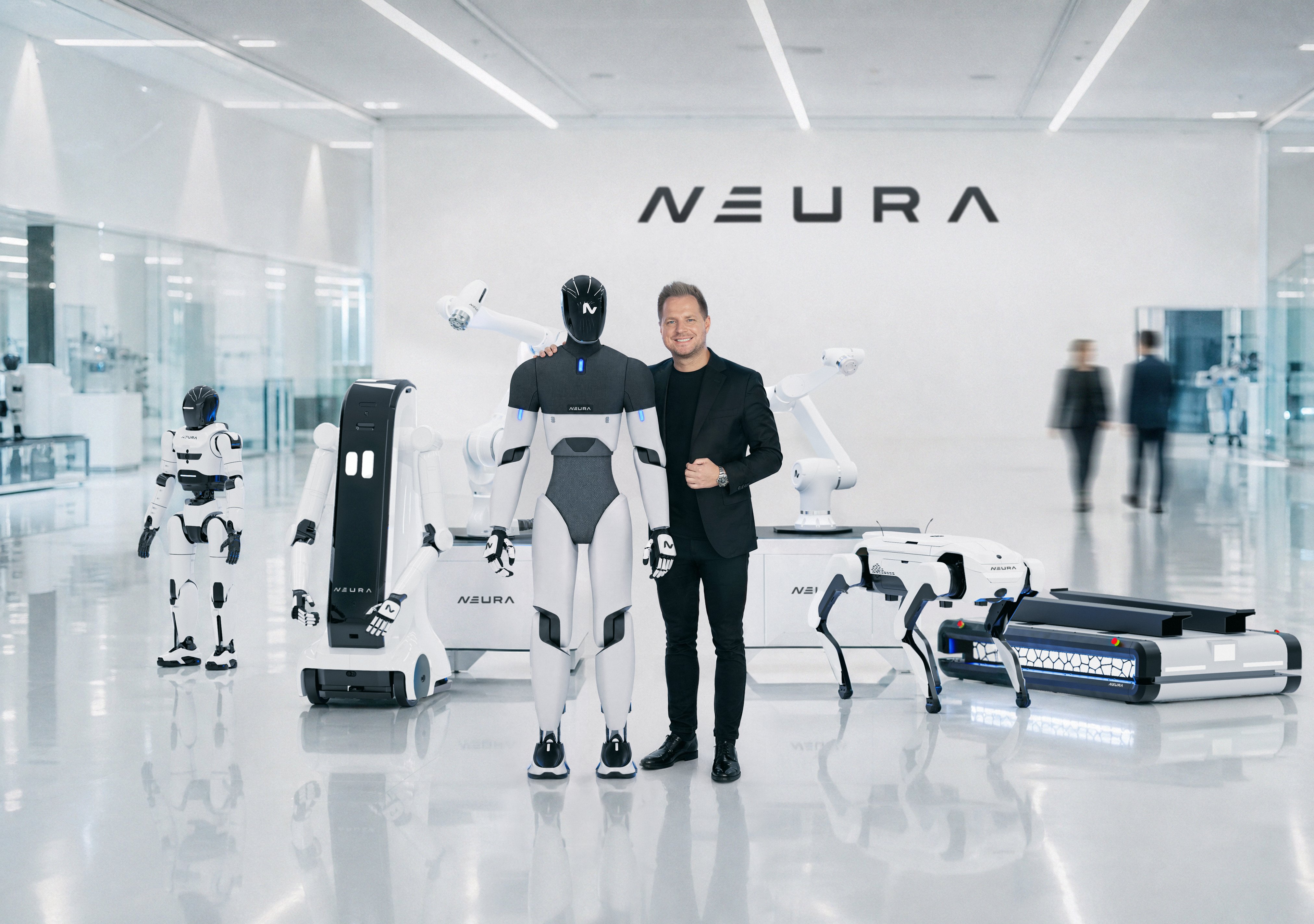
NEURA Robotics, a German company working on humanoid and cognitive robotics has secured $1.4B at a ~$7B valuation for humanoid and cognitive robotics.
Backing includes: Tether, Qualcomm, Amazon, Nvidia, Bosch, Schaeffler and the European Investment Bank.
According to the release, NEURA wants to scale humanoid robot production capacity from 6,000 units this year to tens of thousands next year, with a longer-term target of producing millions of AI-powered robotic arms and humanoids by 2030.
It also reports a >$1B order book for its robots, including humanoids.
NEURA is not the only German robotics capital story either.
Agile Robots is reportedly in talks to raise around $800M, with SoftBank discussing a $300M contribution, for a business spanning industrial arms, warehouse robots and humanoids. This surfaced June 2.
On the defence-autonomy side, Helsing was reported in May to be nearing a $1.2B round at an ~$18B valuation, while Stark was reported last week to be in talks to raise EUR 300M at around EUR 2.5B.
The structural reason is not hard to see: Germany has deep industrial automation, automotive supply chains, precision manufacturing and defence rearmament tailwinds.
Source: NEURA Robotics
THEKER: Europe's AI-native factory robot round
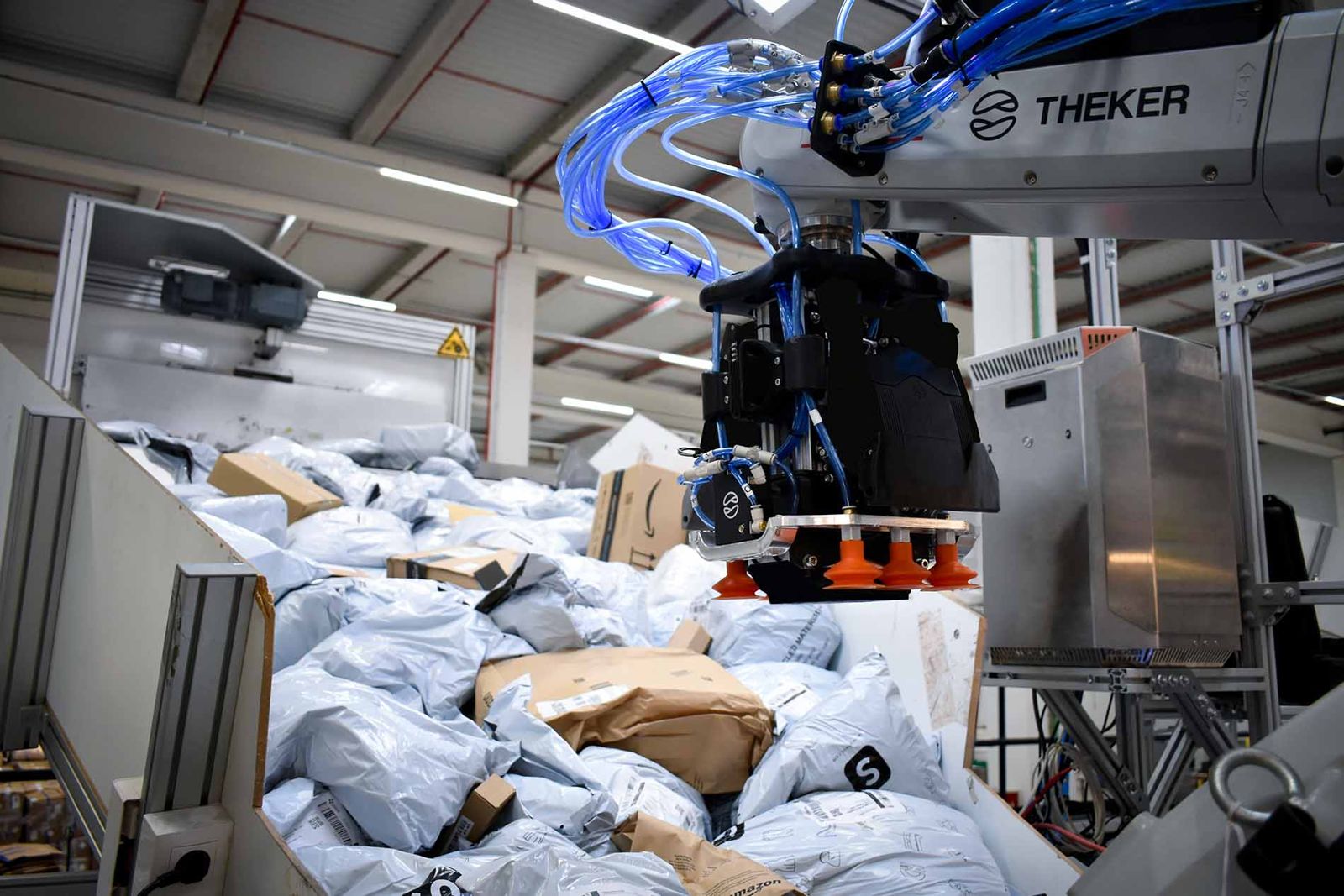
THEKER was the second standout. The Barcelona-based company raised $85 million, or roughly EUR 73 million, in a Series A round led by CRV, with participation from Samsung, LVMH, Cathay Innovation, 20VC, Henkel Ventures, Korelya, Bright Pixel Capital and existing investors including Inditex, Kfund and Kibo Ventures. The company described the deal as Europe's largest robotics Series A to date.
THEKER is building AI-native generalist robots for factories, logistics and retail operations. Its pitch is that industrial robots should be able to handle mixed SKUs, irregular shapes and changing production environments without manual reprogramming. The company says its systems can deploy in days, keep learning in production, and are already operating in production facilities across multiple European countries.
THEKER raised an EUR 18 million seed less than a year ago, described as Spain's largest startup seed round, and this Series A brought in strategic investors from technology, luxury, retail and industrial operations.
Source: THEKER
Standard Bots: U.S. industrial robotics scale-up
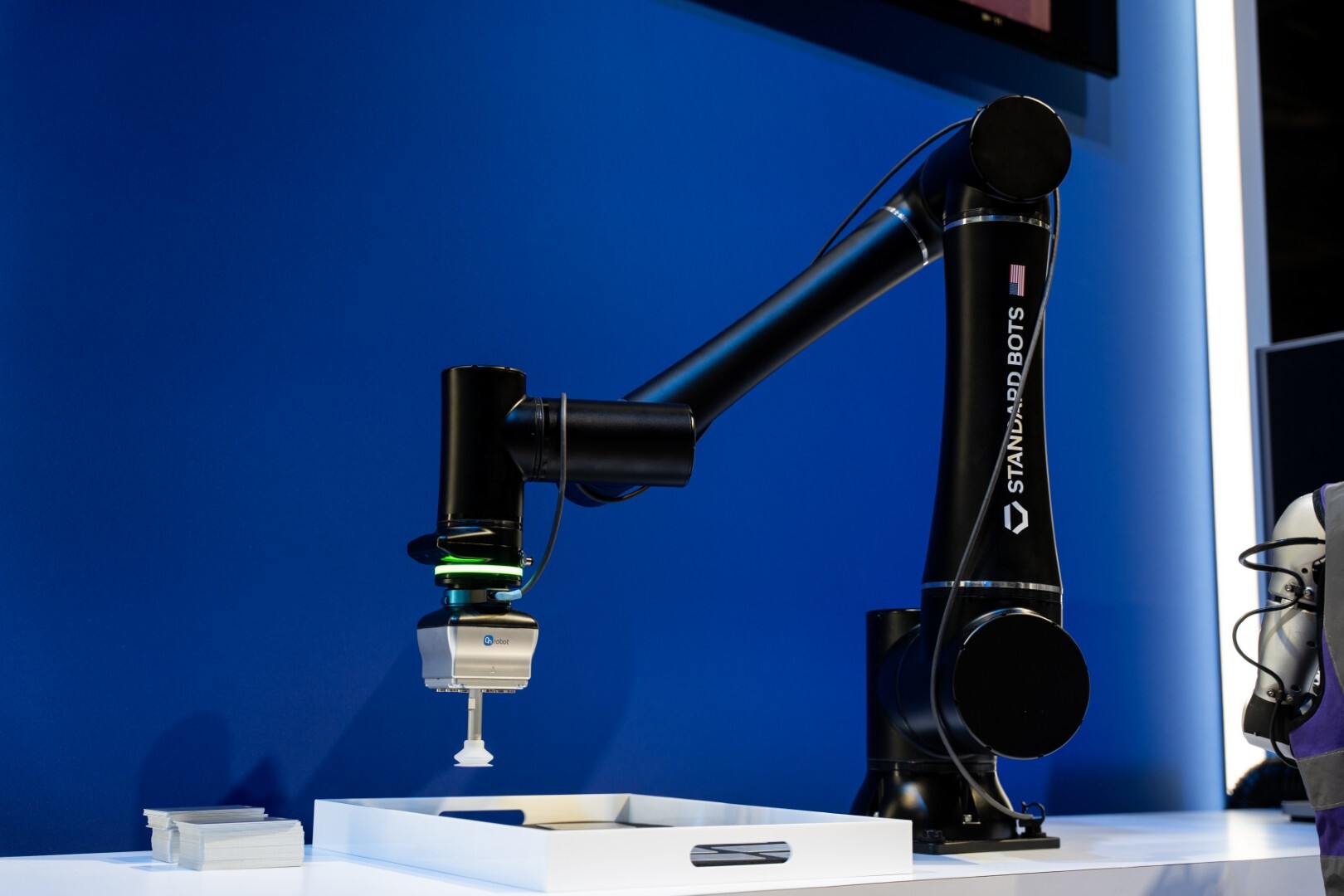
Standard Bots, a New York-based company raised a $200 million Series C at a $1 billion valuation to scale American-made AI-native industrial robots.
The company is focused on industrial robot arms that can be trained through demonstration and deployed by manufacturers without large robotics engineering teams. It also said the funding will support expansion of its Glen Cove, New York manufacturing footprint.
Standard Bots has claimed it is on pace to deliver 10% of new U.S. industrial robot deployments next year. That is an ambitious claim, but it captures why the round belongs near the top of the week, the company is not only selling robot arms, it is selling a simpler deployment model for manufacturers that have historically found industrial automation too expensive or too complex to adopt.
Source: Standard Bots
Funding Ledger
The funding ledger below is pulled from the Korthos database and covers selected public funding rounds across robotics, embodied AI, and the supporting stack.
| Date | Company | Type | Signal |
|---|---|---|---|
| Jun 10 | NEURA Robotics / $1.4B | Series C | Humanoid robotics and physical AI platform. |
| Jun 9 | Standard Bots / $200M | Series C | Industrial robotics for automated workflows. |
| Jun 11 | THEKER / $85M | Series A | AI-native industrial robots for production. |
| Jun 10 | QJ Robots (千诀科技) / ~$40M+ | Series A | Robot brain and decision stack for multi-form robots. |
| Jun 11 | LiberAI / ~$40M+ | Pre-A | Embodied-AI world models and robot intelligence. |
| Jun 12 | Maritime Robotics / EUR 28M | Growth | Autonomous maritime systems and operations. |
| Jun 10 | Maneva / $27M | Series A | Factory AI for industrial vision and operations. |
| Jun 11 | Boya Intelligence (伯牙智能) / ~$5-10M | Angel | Dexterous hands and manipulation solutions. |
| Jun 10 | Kyber / $5M | Seed | Real-time infrastructure for robots and autonomy. |
| Jun 8 | Clear Robotics (Clearbot) / $1.75M | Pre-Series A | Autonomous zero-emission vessel platform. |
| Jun 9 | Mesoware / $1.5M | Pre-seed | AI-powered manufacturing robotic automation. |
| Jun 9 | Integra Robotics / $1.12M | Pre-Series A | Robotics systems and automation solutions. |
| Jun 11 | MW / JPY 3B | Seed (cum.) | AI robotics for residential and daily living. |
| Jun 10 | Weitejia Robotics (韦特嘉机器人) / Undisclosed | Series A | Warehouse embodied-intelligence robotics. |
| Jun 11 | SKAI Intelligence / Undisclosed | Series A | Synthetic data and digital twins for robot training. |
Oddball signal: MW's AI-robotics housing bet
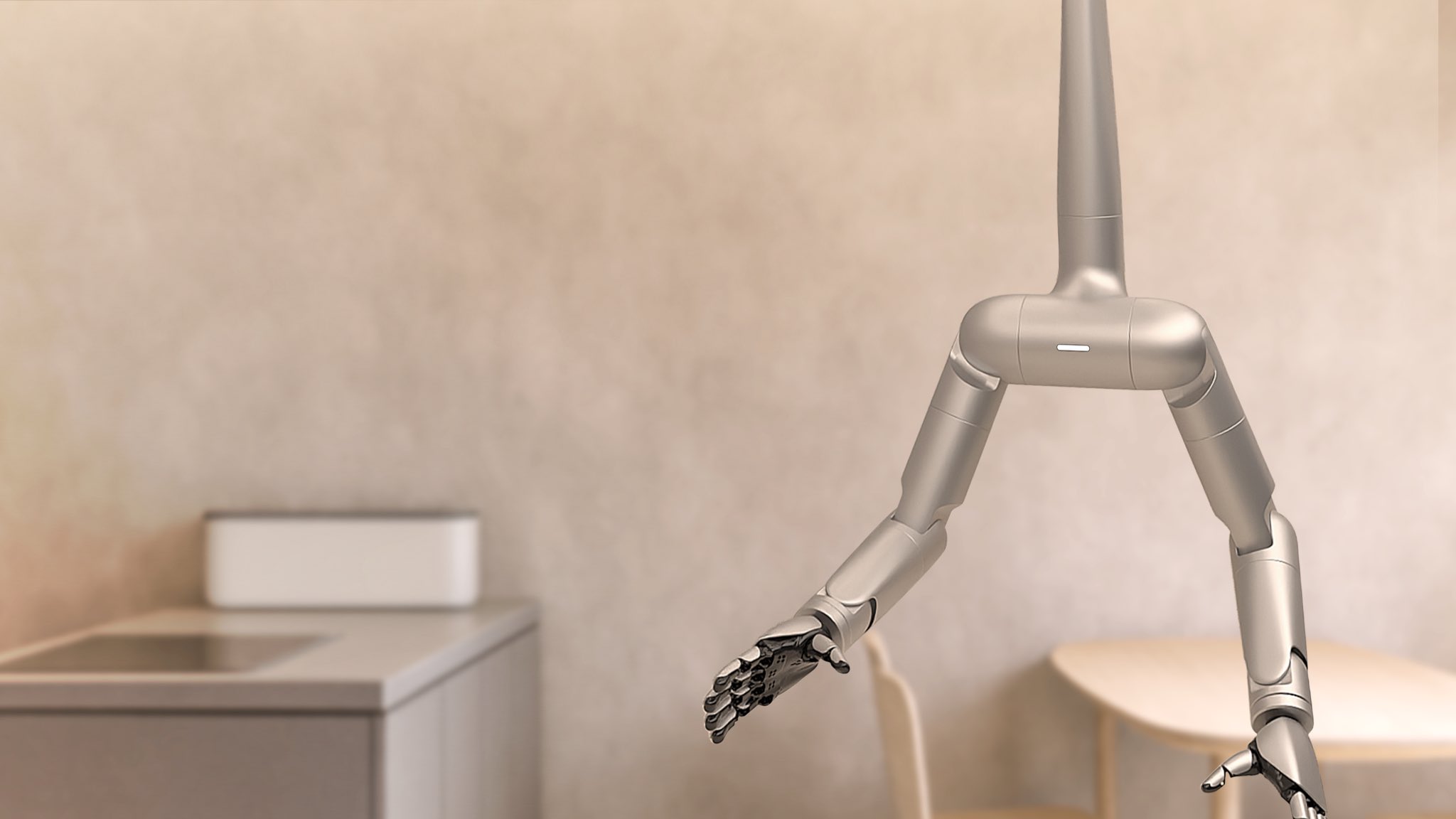
MW stands out from this week's batch as an interesting approach to home robotics. The Japan-based company has raised JPY 3 billion, roughly $20 million, in cumulative seed funding for what it calls Living Home: a housing concept built around architecture, software, sensors, AI, and robotics.
The company is unusual because it is not just building a robot for the home. MW says it is vertically integrating the home itself: land, architecture, construction, software, AI, and robot development. Founder Shuzo Narita says the first homes and software are complete, sales have begun, and the company has received 1,000+ applications. Its first-generation MW bot Gen1 is also complete and has been integrated into a trailer home, with an AI data factory planned to begin operations in August.
Source: MW
IPO and public-market watch
EngineAI
EngineAI was reported to have filed confidentially for a Hong Kong IPO. The Shenzhen humanoid robot maker was last valued around $1.5 billion and is part of the broader Chinese humanoid / embodied-AI pipeline now testing public-market appetite.
Dreame Technology
Dreame Technology which sits in consumer robotics and appliances, is weighing a Hong Kong IPO as soon as 2027, with Bloomberg reporting a potential raise of several hundred million dollars. A separate pre-IPO round is reportedly open at roughly RMB 70 billion ($9.6 billion) pre-money.
Unitree
Unitree is the main live IPO benchmark for China's humanoid sector. The Hangzhou robot maker, known for high-volume legged robots and humanoids, is pursuing a STAR Market listing that would reportedly raise about 4.2B yuan, or roughly $580M, at a valuation around $6.2B. The deal would test public-market appetite for a Chinese robot maker with real shipment volume, consumer visibility, and humanoid ambitions.
Robotics IPO pipeline
The broader pipeline is also notable. Reuters Breakingviews noted that 46 other robotics companies were lined up for Hong Kong IPOs. That does not mean every company is ready for public markets, but it does show that robotics capital is widening beyond private rounds into listings, valuation benchmarks, and public comparables.
Adjacent stack signal: PhysicsX and Prometheus
Two large AI-engineering rounds sat outside the core robotics ledger but still matter for the broader physical-AI stack.
PhysicsX raised $300 million in a Temasek-led round that valued the London-based company at around $2.4 billion. The company uses AI to optimize product design for manufacturing, defence, semiconductors, engines, drones, and other complex physical systems.
Prometheus, the industrial AI startup co-led by Jeff Bezos and Vik Bajaj, raised $12 billion at a reported $41 billion valuation. The company is focused on AI for designing and manufacturing complex physical products such as jet engines, medical devices, and consumer electronics.
Companies covered
- NEURA Robotics
- THEKER
- Standard Bots
- MW
- Agile Robots
- Helsing
- Stark
- EngineAI
- Dreame Technology
- Unitree
- PhysicsX
- Prometheus
- Tether
- Qualcomm
Products covered
- 4NE-1
- Agile ONE
- Living Home
- MW bot Gen1