
AIDOL is building walking humanoid hardware into an industrial service layer
AIDOL’s Moscow debut drew attention after a public fall, but the larger story is the distance between expressive humanoid positioning, official specifications and the operating evidence customers still need.
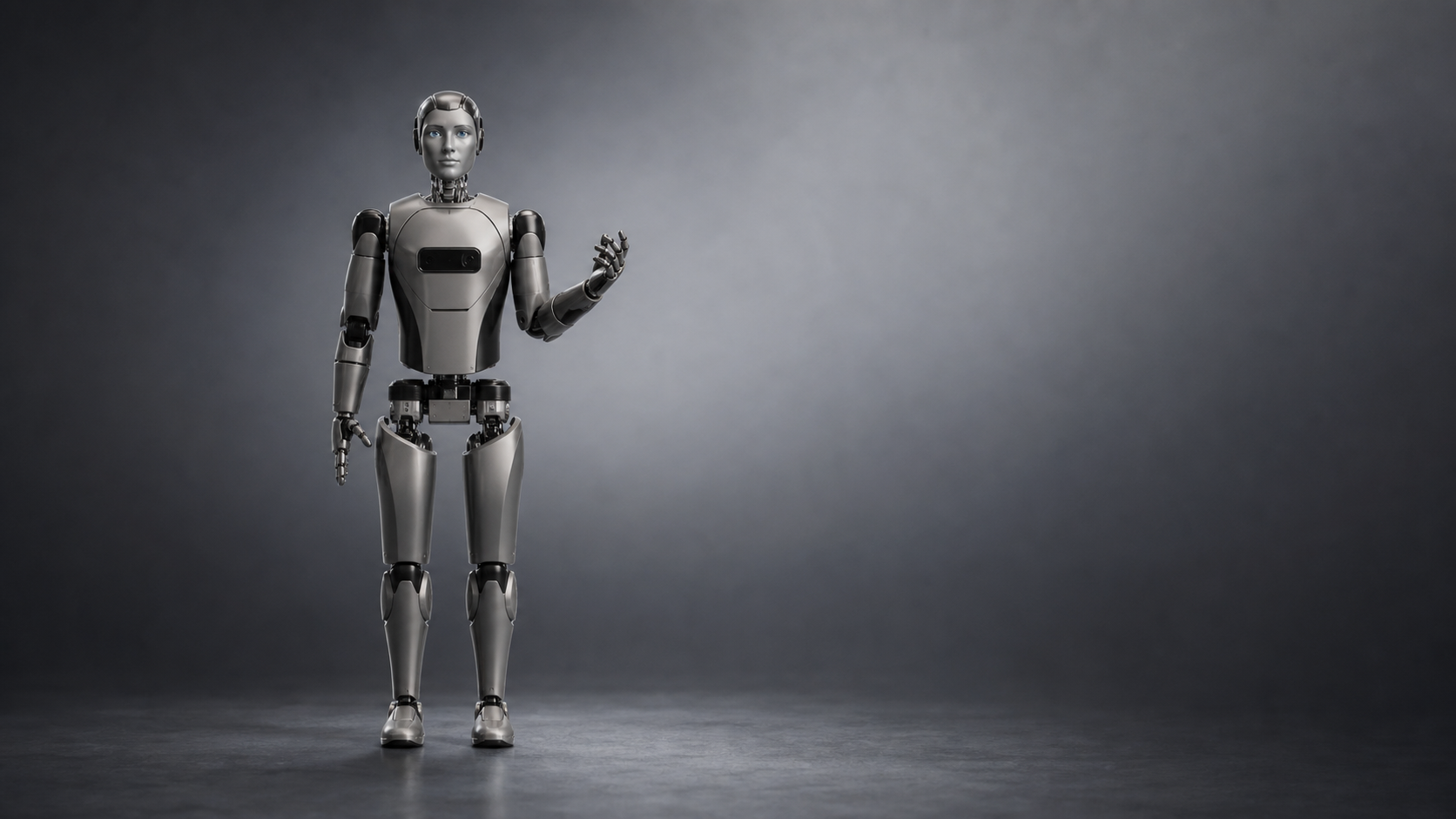
The robot is marketed by Artificial Intelligence Dynamic Organism Lab as a Russian anthropomorphic AI platform. Public specifications describe a 186-centimeter, 95-kilogram biped with 67 degrees of freedom, a 10-kilogram bent-arm payload, and a top speed claim of 6 kilometers per hour. The stated market set includes automotive production, logistics, and education, while the expressive face gives the robot a social-interaction layer that many industrial humanoids avoid.
That combination raises the verification burden. A service robot with a human-like face is judged on timing, eye contact, speech, gesture, and social comfort. An industrial robot is judged on repeatability, uptime, safety, maintainability, and task economics. AIDOL is trying to occupy both surfaces, so the product has to be convincing as a machine and as an interaction interface.
The fall does not settle the technical future of the platform. Early walking robots fail for ordinary engineering reasons: lighting changes, floor texture, calibration drift, weak recovery behavior, startup handling, or insufficient perception margin. It does show why humanoid specifications need operating evidence. A robot can list six-hour autonomy and industrial targets, but customers still need to see stable walking, controlled recovery, repeatable manipulation, and support processes away from a launch stage.
The competitive field includes other early humanoid platforms, Russian and Chinese domestic capability projects, service humanoids built for public interaction, and industrial humanoids from companies such as Figure, Apptronik, Tesla, UBTECH, and Unitree. AIDOL's distinction is visibility as a Russian anthropomorphic platform with an expressive face and a detailed specification set, not proven field maturity.
Public material does not disclose customer deployments, pilot sites, fleet counts, autonomy split, walking endurance, manipulation success rates, or independent test logs. AIDOL's plausible near-term path is constrained service, education, reception, and demonstration environments where the company can refine interaction, operator workflow, and reliability before heavier industrial claims. The strategic challenge is replacing viral visibility with evidence that the robot can do dull work repeatedly, recover from ordinary disturbances, and keep operating after the first public moment.
Have a robotics update Korthos should review? Send news, deployments, product releases, funding rounds, research, or media to tips@korthos.xyz or reach out on X at @agkorthos.