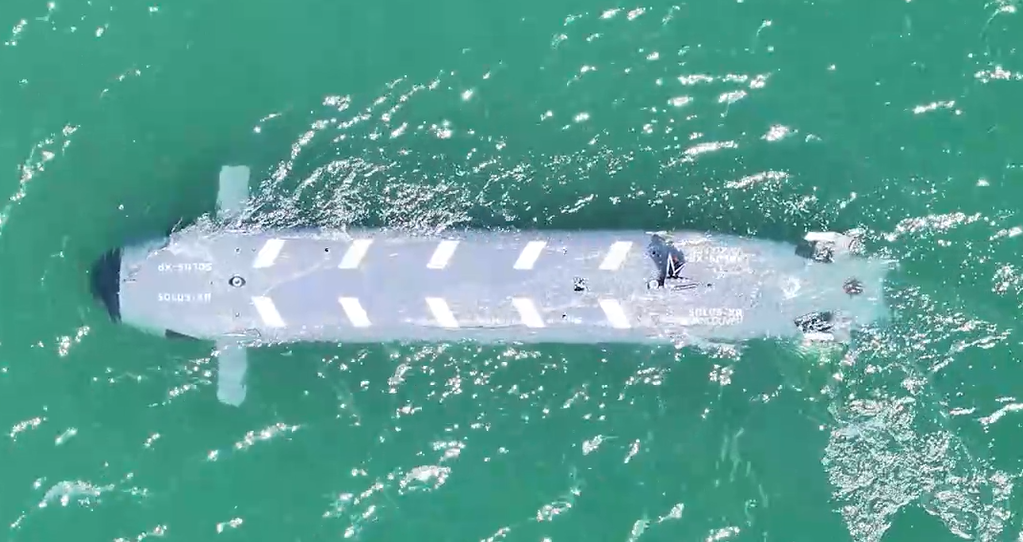
Cellula Robotics US Inc. and Metron signed a 10-year agreement on May 19, 2026 for the U.S. defense market, combining Cellula commercial long-endurance autonomous underwater vehicles with Metron adaptive mission autonomy. The agreement extends a relationship that already included Defense Innovation Unit Combat Autonomous Maritime Platform work and gives Cellula a defined pairing of fuel-cell endurance, mission planning software, and long-term support.
Cellula is headquartered in Burnaby, British Columbia, and employs more than 80 people across Canada, the United States, and the United Kingdom. Founder and president Eric Jackson has four decades in subsea robotic systems. CEO Neil Manning brings subsea telecommunications and oil and gas experience, chief commercial officer Richard Mills previously led marine robotics sales at Kongsberg Maritime, and product director Alex Johnson has long-range and Arctic deployment experience.
The DIU CAMP workshare is explicit. Cellula Robotics USA is responsible for delivering a commercial off-the-shelf, fuel-cell-powered Guardian AUV prototype under a Metron-led contract. Metron supplies mission planning and adaptive autonomy, General Dynamics Applied Physical Sciences integrates mission payload systems, Integer Technologies supplies predictive mission health management, and Cellula works with Schilling Robotics for U.S.-based subsea systems integration, testing, and operational support.
Guardian is the extreme-range defense class in Cellula's fuel-cell AUV family, with an 11.7-meter hull, 8,000-kilogram weight, and 5,000-kilometer maximum range. Envoy scales the same hydrogen fuel-cell approach into a smaller long-range class, with an 8.5-meter length, one-meter diameter, and 2,000-kilometer maximum range for survey, cable inspection, and mine-countermeasure payloads.
The software layer is also becoming clearer. Cellula and Integer announced a collaboration to layer DIGIT COMMAND onto Cellula Nexus through a back-seat driver architecture for long-range, multi-vehicle undersea operations. Metron ANCC and Solus material define the higher-level adaptive planning layer, while Nexus remains Cellula's mission control environment for vehicle operations.
The competitive field includes Anduril Dive-LD, Kongsberg HUGIN, Huntington Ingalls REMUS, Saab Sabertooth, Ocean Infinity, Teledyne Gavia, and defense undersea autonomy programs. Cellula's distinction is hydrogen fuel-cell endurance paired with partner autonomy, payload, health-management, and support layers. Public material still does not disclose delivered unit counts, active fleet size, autonomy intervention logs, mission success rates, or sustainment cost. If the Metron and DIU work turns Guardian into a supported U.S. defense capability, Cellula becomes a long-range undersea autonomy stack rather than only a fuel-cell AUV builder.
Have a robotics update Korthos should review? Send news, deployments, product releases, funding rounds, research, or media to tips@korthos.xyz or reach out on X at @agkorthos.