
Einride is funding autonomous freight from electric truck operations
Einride raised about $100 million in October 2025 to accelerate autonomous freight and global operations after proving customer work with GE Appliances and electric-freight deployments.
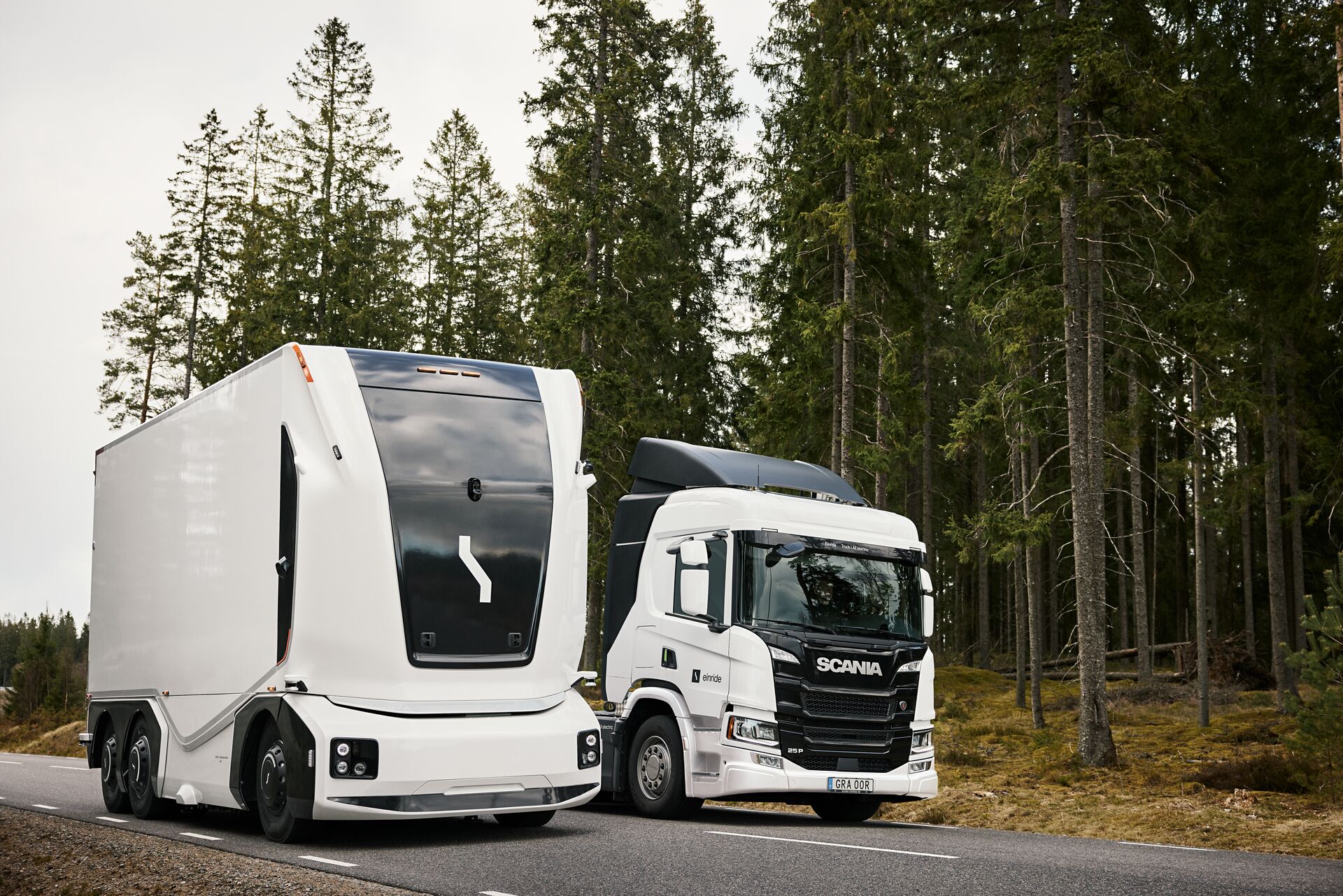
Einride raised about $100 million on October 1, 2025 to accelerate autonomous freight and expand global operations. The round builds on a business that already includes digital freight planning, electric trucks, charging infrastructure, and cabless autonomous vehicles. Einride is funding autonomy inside a broader freight operating system, not as a standalone truck demo.
Einride was founded in 2016 by Robert Falck, Linn?a Kornehed, and Filip Lilja. Falck previously worked at Volvo GTO Powertrain and has framed the company around freight decarbonization after working in diesel truck systems. That origin fits a company selling electric freight operations before asking customers to trust cabless autonomy.
GE Appliances gives the autonomy story its clearest U.S. proof. In 2022, NHTSA approved Einride's cabless autonomous electric vehicle for public-road operation in a pilot supporting GE Appliances flows in Tennessee. The Selmer route moved finished goods from factory to warehouse after that approval, giving the cabless vehicle a constrained freight use case rather than a broad highway rollout.
The funding history shows how capital-intensive the model is. Einride raised $500 million in equity and debt in 2022, with debt aimed at vehicles as the company expanded in Europe and North America. The 2025 raise continues that deployment-heavy pattern: vehicles, charging, software, freight operations, remote oversight, and autonomy have to scale together.
The competitive field includes Aurora, Kodiak, Waabi, Plus, Torc, Tesla Semi fleet tools, electric-truck leasing, and traditional managed transportation providers. Einride's distinction is full-stack freight conversion. It can sell shippers lower-emission freight operations now, then introduce cabless autonomy on routes where the operating model, charging, and customer flow already exist.
The proof boundary is autonomous route economics. Public sources show financing scale, named customer pilots, electric-freight operations, and public-road approval, but they do not disclose autonomous miles by customer, remote-operator ratio, cost per mile, or customer-by-customer savings. Einride's strategic bet is that electric freight operations create the runway for autonomous freight, turning cabless trucks into one layer of a managed logistics system rather than the whole story.
Have a robotics update Korthos should review? Send news, deployments, product releases, funding rounds, research, or media to tips@korthos.xyz or reach out on X at @agkorthos.