
FieldAI is building robotics autonomy into a deployment-surface layer
The Irvine company raised $405M for Field Foundation Models after deployments across construction, energy, manufacturing, logistics and inspection environments.
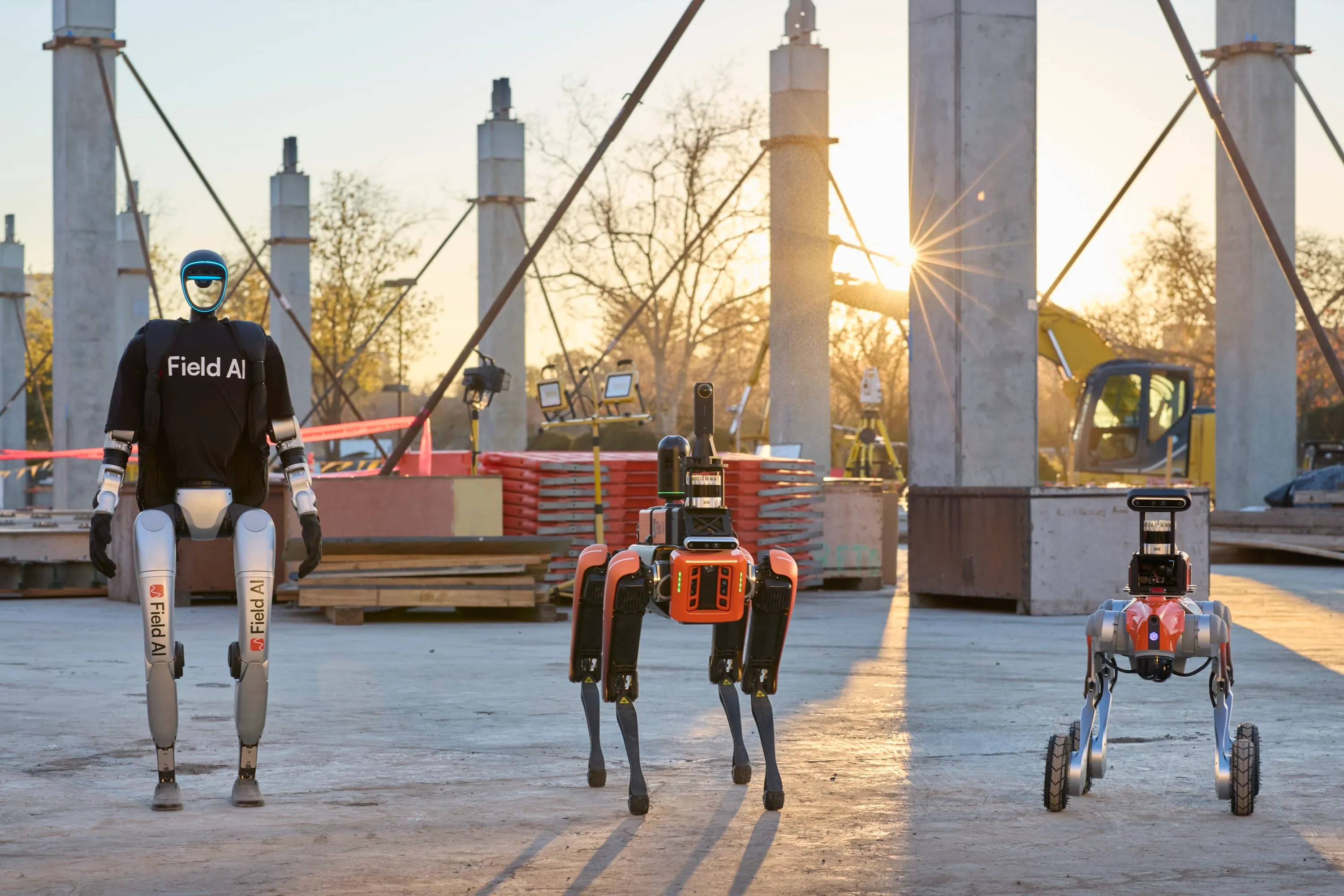
FieldAI was founded in 2023 and is headquartered in Irvine, California. Founder and CEO Ali Agha came out of field robotics work, and the team includes robotics veterans from DeepMind, NASA JPL, and Toyota Research Institute. The company calls its software Field Foundation Models, aimed at localization, planning, mapping, and risk-aware behavior in changing physical environments.
The funding announcement cited customer deployments in Japan, Europe, and the United States across construction, energy, manufacturing, urban delivery, and inspection. FieldAI also says its models have been tested across quadrupeds, humanoids, wheeled robots, and passenger-scale vehicles. Those claims support a platform thesis, but the public record mostly names categories and geographies rather than customer-level deployments.
The competitive field includes Field AI alternatives such as Physical Intelligence, Skild AI, Google DeepMind robotics, NVIDIA Isaac and GR00T, robot OEM autonomy stacks, and more specialized field autonomy companies such as Built Robotics, SafeAI, and Teleo. FieldAI's distinction is deployment-surface autonomy: software meant to move across robot types and dirty, changing environments without requiring each customer to rebuild the navigation stack.
Public material still does not disclose most customer names, deployment counts, contract sizes, intervention rates, uptime, safety incidents, or task-level productivity. The strategic test is whether FieldAI can turn broad robot-body compatibility into repeatable customer proof. If named sites show the same autonomy layer working across construction, energy, manufacturing, and inspection, FieldAI becomes a deployment infrastructure company for robots that have to operate away from clean warehouse maps.
Have a robotics update Korthos should review? Send news, deployments, product releases, funding rounds, research, or media to tips@korthos.xyz or reach out on X at @agkorthos.