Freeform is turning laser metal printing into autonomous factory capacity
A 67 million dollar Series B, former SpaceX engineering base, and multi-laser factory roadmap push Freeform from metal additive manufacturing into production-scale industrial capacity.
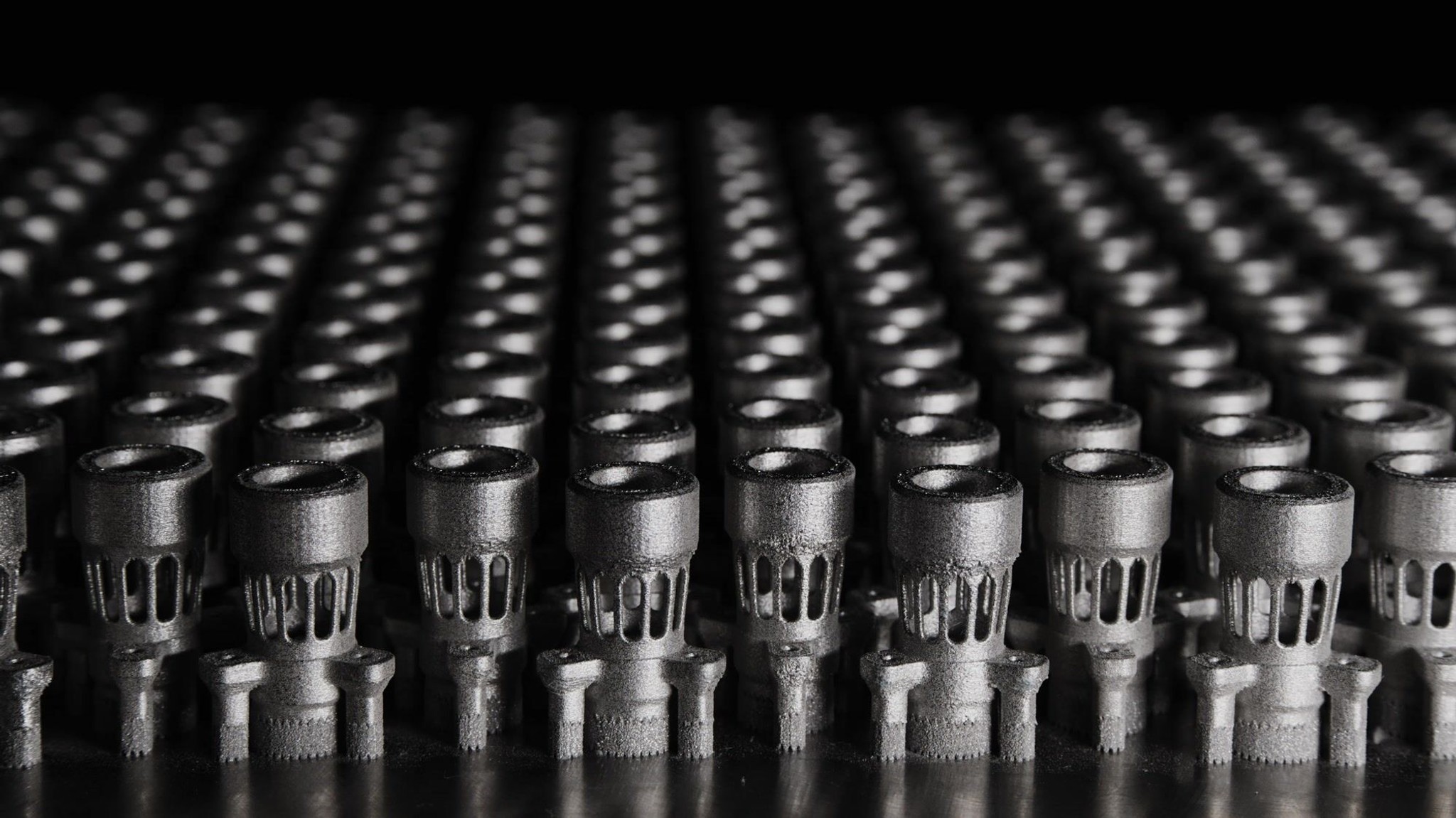
The core process is built around GoldenEye, a production system that uses 18 lasers to fuse metal powders into precision components. Freeform's next-generation Skyfall platform, planned for 2026, is intended to scale from 18 lasers to hundreds of lasers and push output into thousands of kilograms of metal. That is the strategic jump: from advanced print cells into autonomous factory capacity.
The competitive field includes Velo3D, Desktop Metal/ExOne-style metal additive systems, Relativity Space manufacturing work, Hadrian, Divergent, traditional CNC suppliers, and in-house aerospace additive programs. Freeform's distinction is autonomous manufacturing-as-a-service: customers buy qualified parts and capacity rather than adopting and tuning the metal printers themselves.
Public material still does not disclose GoldenEye build volume, supported material list, part-size range, print yield by material, machine uptime, quality-control logs, or customer production volumes. The strategic question is whether Freeform can make laser metal printing behave like reliable factory capacity. If Skyfall scales output while keeping quality and certification paths intact, Freeform becomes an autonomous manufacturing supplier for aerospace, defense, energy, and mobility customers that need metal parts faster than conventional tooling can move.
Have a robotics update Korthos should review? Send news, deployments, product releases, funding rounds, research, or media to tips@korthos.xyz or reach out on X at @agkorthos.