
Genesis AI is putting a robot brain and hand ahead of customer deployments
Genesis AI followed its July 2025 $105 million seed round with GENE-26.5, a robotic foundation model and dexterous hand system aimed at manipulation before public customer deployments.
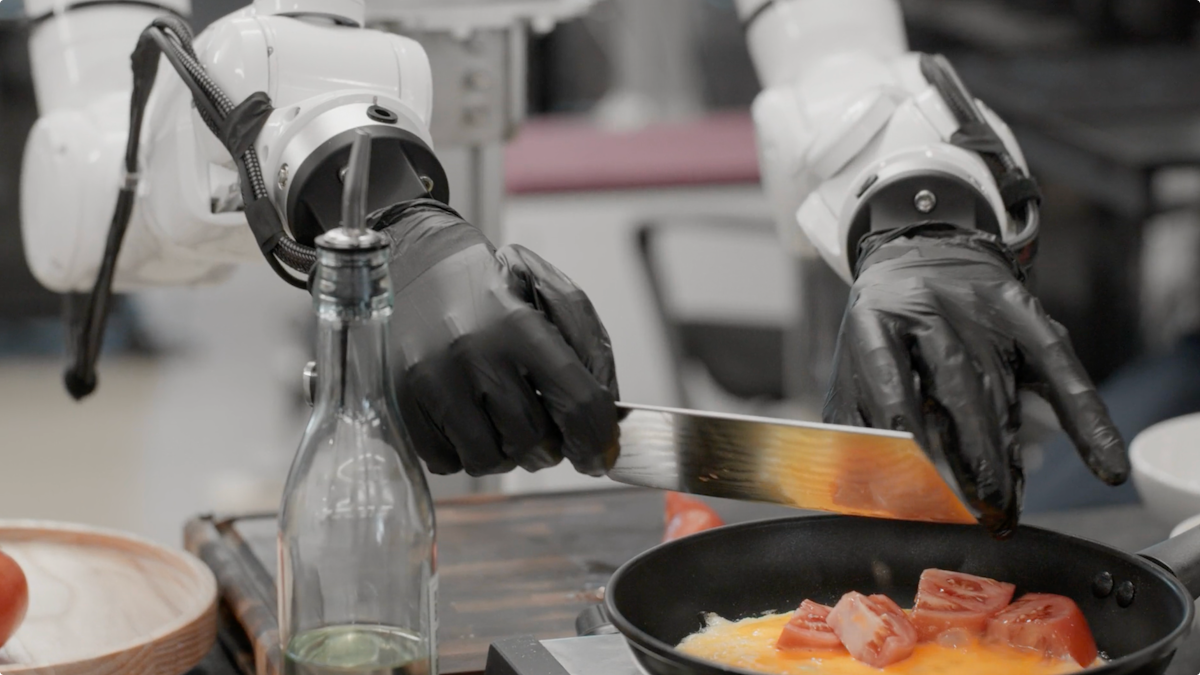
Genesis AI unveiled GENE-26.5 on May 7, 2026, turning its earlier funding story into a model-and-hardware reveal. The company introduced a robotic foundation model, a human-scale dexterous hand, and a data engine for training manipulation skills. The public proof is a demo stack before customer deployment: Genesis showed complex manipulation tasks without publishing paid site metrics or robot counts.
The reveal follows Genesis AI's July 2025 stealth exit with $105 million in seed funding co-led by Eclipse and Khosla Ventures. The seed round funded a universal robotics foundation model and a horizontal robotics platform built from simulation, generated data, and real robot collection. Genesis is using venture scale to attack the data bottleneck that keeps robot policies narrow and expensive to adapt.
GENE-26.5 is aimed at dexterous work, where manipulation depends on contact, sequencing, and long-horizon control. Genesis showed tomato chopping, one-handed egg cracking, pipetting, wire harnessing, Rubik's Cube manipulation, and piano playing. The demo set gives the launch concrete texture beyond a generic robot-brain reveal.
The company was founded by Zhou Xian and Theophile Gervet. TechCrunch reported that Zhou holds a PhD in robotics from Carnegie Mellon University and that Gervet previously worked as a research scientist at Mistral AI. That pairing gives Genesis a natural split between robotics data infrastructure and modern model-building experience.
The competitive field includes Physical Intelligence, Skild AI, Google DeepMind robotics, NVIDIA GR00T, Covariant RFM, Figure Helix, and internal robot-foundation-model work at large robotics companies. Genesis's distinction is the full-stack hand-and-data route: a proprietary hand, tactile glove mapping, generated data, simulation, and model training built together.
The proof boundary is customer translation. Public material shows capital, founders, demo tasks, model language, hand hardware, and data strategy, but not named customers, production task success rates, fleet deployments, or independent benchmarks. Genesis's strategic bet is that dexterous robot intelligence has to be built with the hand, data engine, and model in one loop before it can become a deployable layer for real machines.
Have a robotics update Korthos should review? Send news, deployments, product releases, funding rounds, research, or media to tips@korthos.xyz or reach out on X at @agkorthos.