
Havoc is turning autonomous vessels into an all-domain command layer
A 100 million dollar Series A round follows Mavrik and Teleo acquisitions, expanding Havoc from maritime autonomy into air and ground fleet supervision.
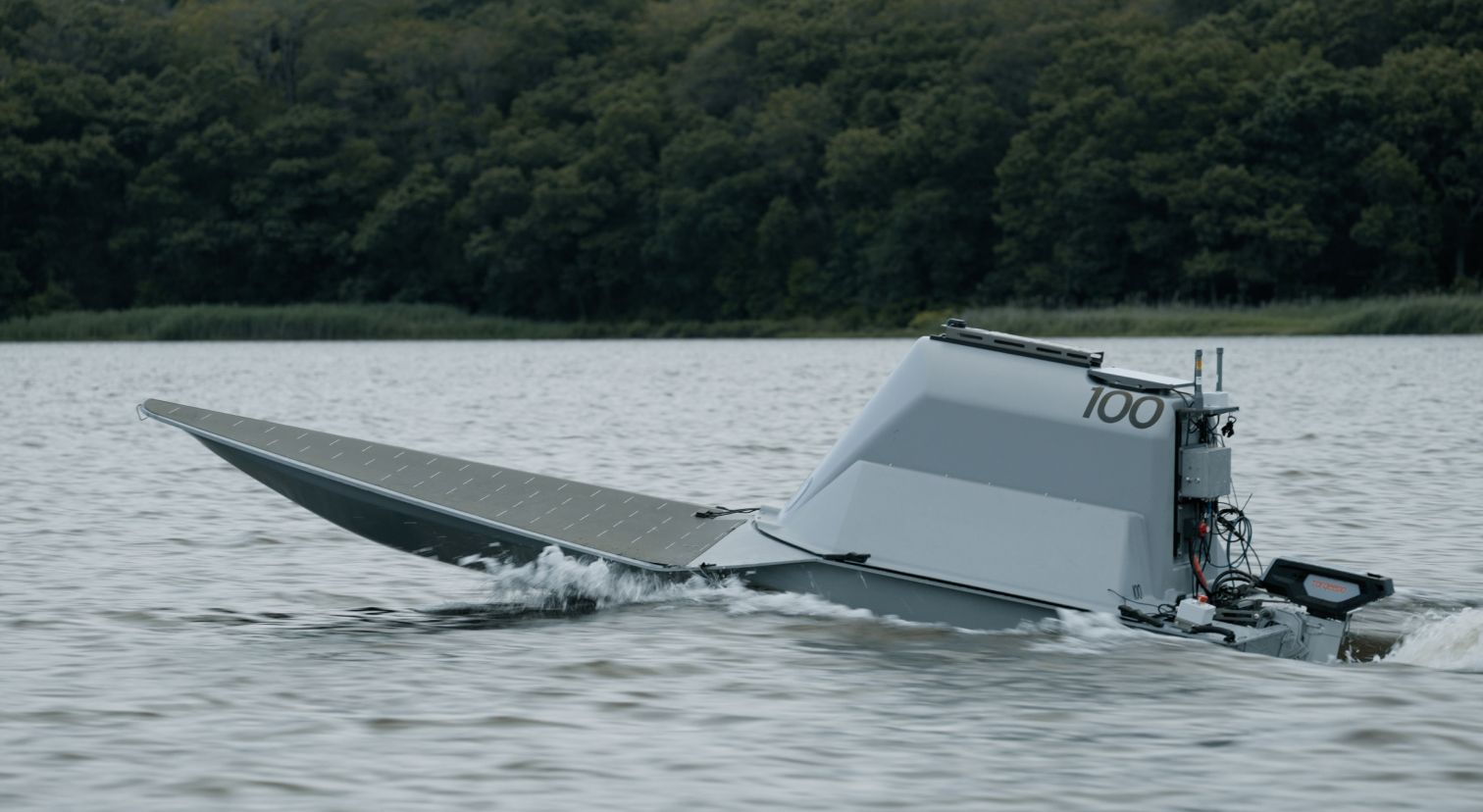
Havoc raised a $100 million Series A on May 12, 2026, bringing total capital raised to roughly $200 million since 2024. The round followed a set of operating claims unusual for a young autonomous vessel company: more than 25,000 hours of autonomous testing, more than 200 billion operational data points, more than 100 autonomous surface vessels built, and more than 30 vessels delivered to the U.S. Department of Defense.
The company is led by co-founders Paul Lwin and Joe Turner. Lwin is CEO, with a U.S. Navy naval flight officer background, Test Pilot School training, a Yale MBA, and a Johns Hopkins computer science master's degree. Turner is COO, with U.S. Navy surface warfare officer experience and prior work at Exocetus Autonomous Systems. Havoc reports more than 200 employees across Providence, Boston, and Austin.
The vessel family runs from Rampage to Kaikoa and Atlas. Rampage is a small electric surface vessel with a 15-knot top speed, roughly 100-nautical-mile range, and 300-pound payload capacity. Kaikoa scales to larger high-speed hulls, while Atlas reaches the medium-USV class with a 100-foot baseline, 30-plus-knot top speed, range up to 7,000 nautical miles at 12 knots, four-TEU cargo capacity, and substantial onboard power.
The competitive field includes Saronic, Seasats, Anduril maritime systems, Saildrone, MARTAC, L3Harris unmanned vessels, and Navy-led autonomy programs. Havoc's distinction is a cross-domain command thesis: maritime vessels, acquired air platforms, remote fleet supervision, and a shared autonomy stack. Public material does not disclose customer-level unit counts, fleet availability, autonomy intervention logs, mission outcomes, or contract economics. If Havoc converts its DoD deliveries and acquisitions into repeatable multi-domain operations, it becomes a command layer for unmanned fleets rather than a boat company.
Have a robotics update Korthos should review? Send news, deployments, product releases, funding rounds, research, or media to tips@korthos.xyz or reach out on X at @agkorthos.