
LimX’s $200M Pre-IPO Round Adds to China’s Robotics Listing Wave
The Shenzhen humanoid company has raised roughly $400 million in five months as private robotics funding increasingly moves toward the public markets.
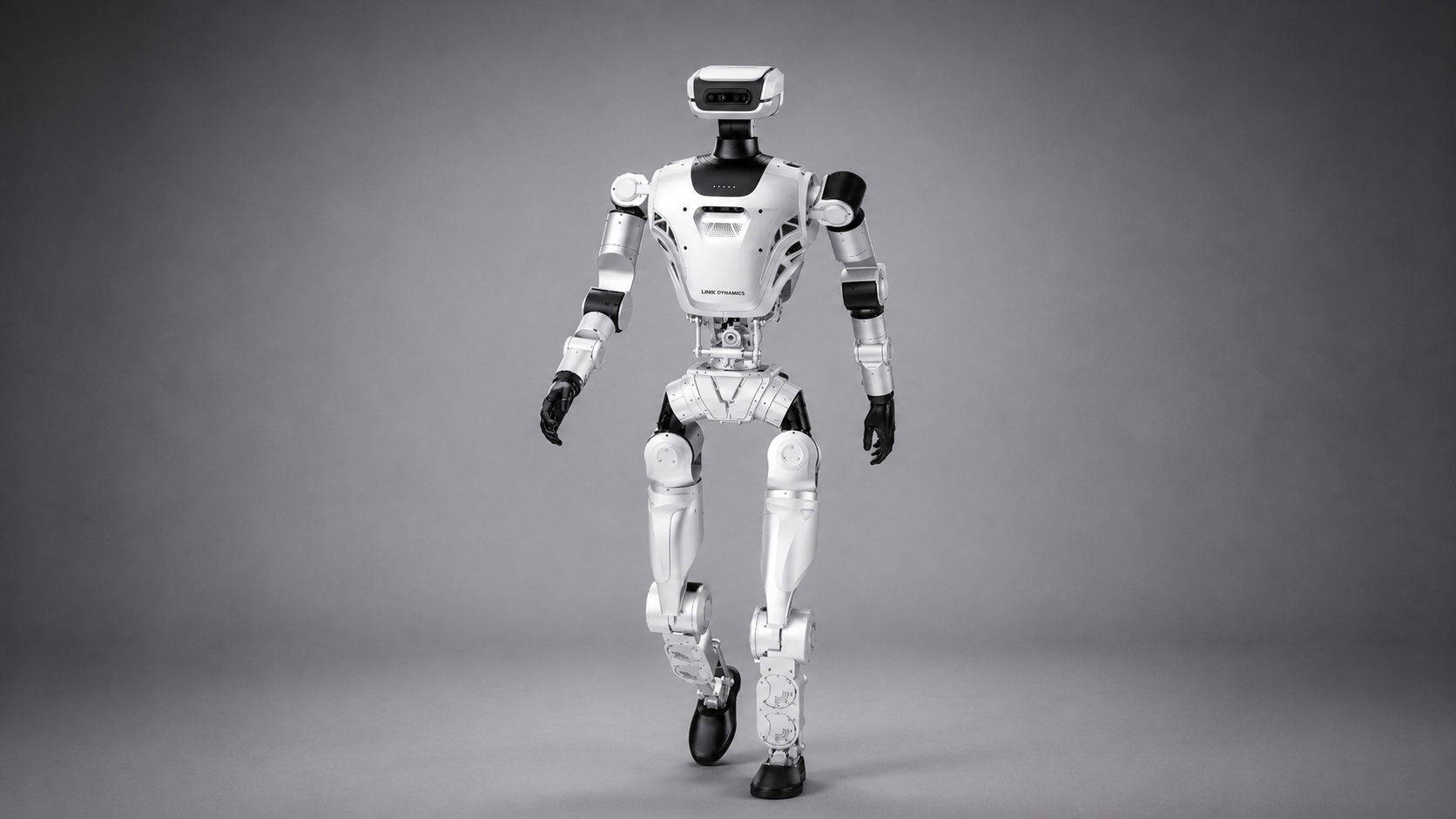
LimX Dynamics has raised nearly $200 million in Pre-IPO financing, five months after closing a separate $200 million Series B.
The latest round values the Shenzhen humanoid company at RMB 15 billion, roughly US$2.1–2.2 billion, bringing its total funding over the past six months to around $400 million.
New investors include IDG Capital, Lens Technology, GGG Group, Redstone VC, Hua Capital and Hefei Binhu Industrial Development Group. Stone Venture followed on again, while existing shareholders including NIO Capital, SAIC-backed Shangqi Capital and others increased their positions.
Lens Technology is a particularly relevant addition. The company brings large-scale consumer-electronics manufacturing and precision-assembly experience as LimX works to expand its global supply chain and delivery capacity.
Beyond a single humanoid
LimX is building a wider robotics stack rather than relying on one complete humanoid platform.
Its portfolio spans full-size humanoids, modular developer robots, whole-body motion-control models, the COSA embodied-agent operating system and FluxVLA, an open engineering stack for training vision-language-action models.
The company says its products have accumulated thousands of orders, with more than half coming from overseas. It has also reported hundreds of units already shipped. The latest financing will support further work on integrated motion and cognitive intelligence, global expansion and the planned deployment of thousands of autonomous humanoids.
LimX’s Luna humanoid has begun deliveries to domestic and overseas customers, while its TRON 2 multi-form robot has received batch orders.
The company completed a shareholding reform in March 2026, a common preparatory step for a future listing. Reporting around the round says LimX began advancing an IPO process earlier this year, although the company has not publicly confirmed a filing venue or timetable.
That distinction matters. “Pre-IPO” is a financing label, not a formal regulatory stage, and it does not guarantee that a listing is imminent. But in LimX’s case, the label, shareholding reform and reported IPO work all point in the same direction.
China’s robotics funding cycle is moving toward IPOs
LimX’s financing comes amid a wider public-markets shift across Chinese robotics and autonomy.
Bloomberg recently counted at least 46 robotics-related companies in Hong Kong’s IPO pipeline, representing more than 10% of all applicants. Companies reported to be in the queue include Leju Robotics and Deep Robotics.
The pipeline spans more than humanoids. It includes companies across industrial robotics, autonomous driving, mining autonomy, machine vision and enabling technologies.
Several have already reached the market. Momenta raised approximately $751 million in its July Hong Kong listing, part of a broader resurgence in Chinese technology fundraising through the exchange.
Mainland listings add another route.
Unitree has secured approval for a Shanghai STAR Market IPO seeking to raise approximately RMB 4.2 billion, or $619 million. The proceeds are intended to support AI models, new robot development and a smart-manufacturing base.
LimX has not yet reached that stage, but its latest financing shows another major Chinese humanoid company positioning for the transition from private capital to public markets.
Capital is concentrating around scale
The size and timing of LimX’s two recent rounds are notable.
Its February Series B already brought in $200 million from financial investors, industrial companies and existing shareholders. The new financing effectively doubles that amount within five months.
That capital is arriving as the requirements for competing in humanoids become increasingly industrial.
Companies need more than models and prototypes. They need supply chains, production systems, overseas delivery, developer ecosystems and enough capital to support long commercialisation cycles.
LimX is attempting to cover several of those layers itself: robot hardware, motion intelligence, embodied operating systems, open model infrastructure and global distribution.
The Pre-IPO label is therefore more than a description of the round. It reflects a broader stage in China’s robotics market.
Private funding is still accelerating, but for a growing number of companies the next benchmark is no longer another venture round. It is access to public capital.
Have a robotics update Korthos should review? Send news, deployments, product releases, funding rounds, research, or media to tips@korthos.xyz or reach out on X at @agkorthos.