Shield AI is turning autonomy software into a defence aircraft company
The companys latest funding, simulation acquisition and X-BAT launch show a defence autonomy stack forming across software, training environments and aircraft.
Shield was founded in 2015 by Brandon Tseng, Ryan Tseng, and Andrew Reiter. Brandon Tseng came from the Navy SEALs, while the company later brought in Gary Steele as CEO and kept Ryan Tseng as president and chief strategy officer, Brandon Tseng as president, and Nathan Michael as CTO. That mix gives Shield both mission-origin credibility and the operating structure needed for a defense aerospace company.
The competitive field includes Anduril, General Atomics, AeroVironment, Kratos, Helsing, Palantir defense autonomy work, traditional defense primes, and internal military autonomy programs. Shield's distinction is a software-first autonomy stack tied to its own aircraft programs and now to simulation infrastructure, rather than a single airframe or a mission-planning tool alone.
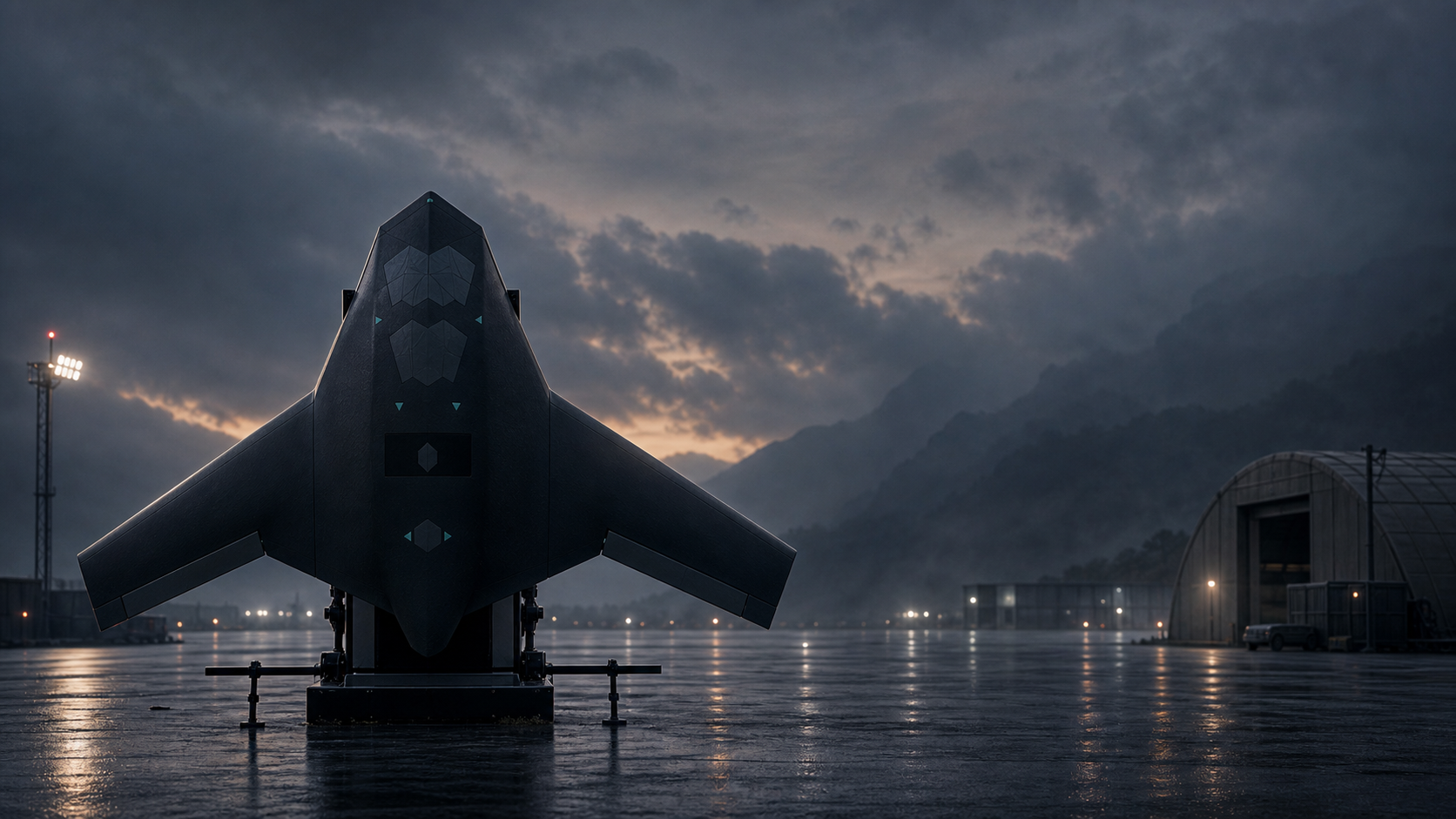
Public material still does not show delivered aircraft counts by customer, mission availability, autonomy performance under degraded conditions, fleet sustainment, training adoption, contract depth, or repeatable operational results across the full aircraft family. The strategic test is whether Shield can turn Hivemind, V-BAT, X-BAT, and Aechelon into one defense-aircraft operating system. If it can, the company becomes an autonomy prime for contested aviation rather than only a high-valuation defense startup.
Have a robotics update Korthos should review? Send news, deployments, product releases, funding rounds, research, or media to tips@korthos.xyz or reach out on X at @agkorthos.