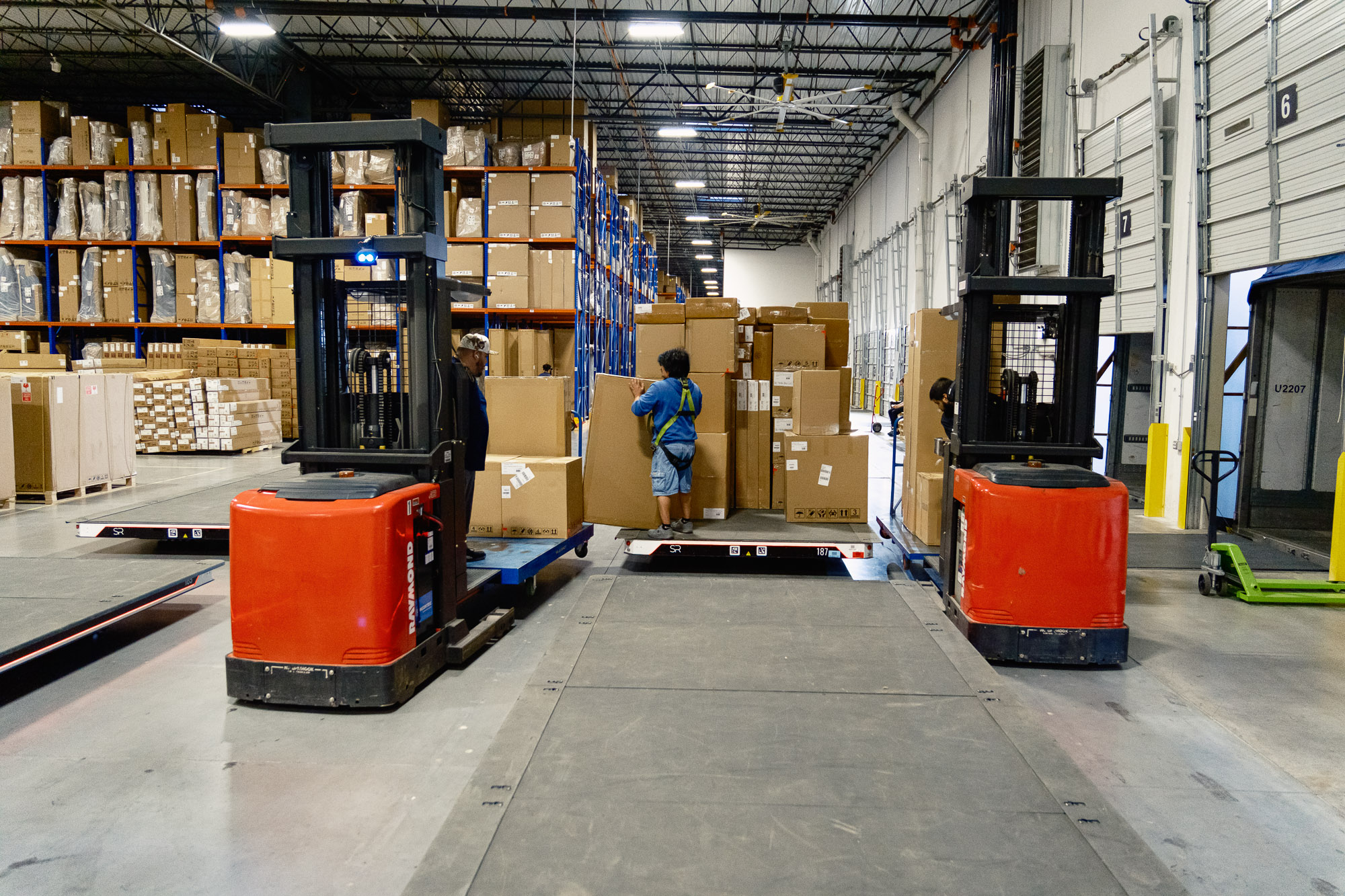
Slip Robotics has a clear dock automation proof point: Four Hands deployed 15 SlipBots across multiple Austin, Texas facilities and reported trailer loading and unloading time falling from 90 minutes to 10 minutes per trailer. Operators load products directly onto SlipBots without a floor-staging step, and receiving teams unload freight from all four sides after the robots exit the trailer.
The Four Hands case sits inside a broader commercial base. By December 2024, Slip had launched commercially and placed hundreds of robots across 25 sites for more than 10 customers, with named customers including John Deere, Nissan, and GE Appliances. Slip also raised a $28 million Series B led by DCVC, with Eve Atlas and Tech Square Ventures participating.
SlipBot is built around a simple dock constraint: trailers are still loaded and unloaded through labor-heavy, time-sensitive processes even inside automated facilities. The robot carries 12,000 pounds of freight on a deck with a 204-inch length and 98-inch maximum width. Three SlipBots fit inside a standard trailer for a five-minute load or unload cycle, with a human operator guiding the robot before autonomous alignment and parking.
SlipLift extends the same dock model into heavier freight and lower-volume routes. The product path moves from full-trailer robotic decks toward dock automation for freight that does not fit the original SlipBot routing pattern. Freight mix creates the operating problem: docks handle changing shipment sizes, driver timing, damaged packaging, and labor availability every day.
The competitive field includes trailer-loading automation from Boston Dynamics Stretch-adjacent dock systems, Pickle Robot unloading, Mujin TruckBot, conventional dock equipment, autonomous forklifts, and manual lift-truck operations. Slip's distinction is a whole-trailer deck approach that changes the loading process before individual case handling begins.
Public material does not disclose pricing, customer retention, site-level uptime, trailer damage rates, autonomy intervention frequency, robot counts by named customer, or SlipLift payload limits. The strategic test is whether Slip can make 10-minute trailer turns repeatable across more customers than Four Hands. If it can, SlipBot becomes a dock-capacity layer for manufacturers, retailers, and logistics operators that need faster turns without rebuilding every warehouse aisle.
Have a robotics update Korthos should review? Send news, deployments, product releases, funding rounds, research, or media to tips@korthos.xyz or reach out on X at @agkorthos.