
Mantis Robotics is building MR-1 safety functions into fenceless workcells
A February 2026 ISO certification connected Mantis Robotics company formation, Amazon Industrial Innovation Fund backing, MR-1 safety functions, and fenceless high-speed arm claims.
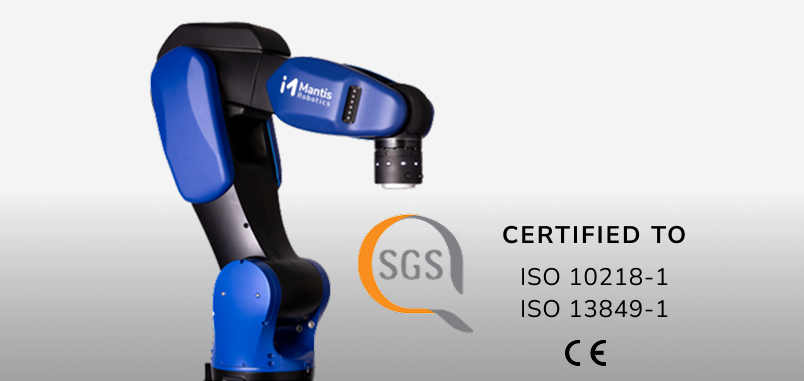
Mantis Robotics announced MR-1 safety certification to ISO 10218 and ISO 13849 on February 24, 2026, turning the company's fenceless robot-arm thesis into a certification event. The commercial claim is clear: high-speed industrial arms normally need cages or separation, while slow collaborative arms can limit throughput. Mantis is trying to operate in the space between those two options.
The competitive field includes Universal Robots, FANUC CRX, ABB GoFa, KUKA collaborative arms, safety-scanner based workcells from SICK and Pilz ecosystems, and conventional caged industrial robots. Mantis's distinction is certified dynamic safety around a faster industrial arm, aimed at workcells where factories want throughput without fencing away valuable floor space.
Public material does not disclose customer cell count, production uptime, cycle-time improvement, safety incident record, integration cost, or MR-1 deployment economics. The strategic test is whether certification converts fenceless operation from a demo claim into a factory buying argument. If MR-1 can maintain speed while safely adapting around people, Mantis becomes a safety-controlled workcell platform for manufacturers that need more flexible floor layouts.
Have a robotics update Korthos should review? Send news, deployments, product releases, funding rounds, research, or media to tips@korthos.xyz or reach out on X at @agkorthos.