Seasats is turning autonomous surface vessels into a naval data infrastructure layer
A $20 million Series A, a $24 million APFIT award and a $100 million-plus contract base support a distributed hull strategy for persistent ocean scouting.
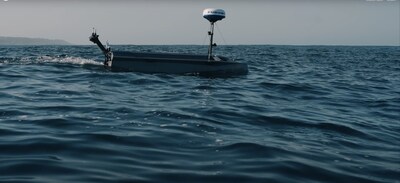
Quickfish adds a faster interceptor layer above Lightfish, while Heavyfish is the largest planned hull in the same staircase. Quickfish completed an eight-day continuous sea trial in March 2026, with a 450-pound payload, 35-plus-knot speed, and an integrated UAV payload bay. Heavyfish is listed with a 2026 splash date, 9,000-pound weight, 1,000-pound payload capacity, and 12-knot top speed.
The competitive field includes Saildrone, Saronic, Anduril maritime systems, MARTAC, L3Harris unmanned vessels, Sea Machines, and Navy-led autonomy programs. Seasats' distinction is small, persistent, modular surface vessels that can be fielded as distributed maritime sensors or payload carriers without the cost profile of larger autonomous ships.
Public procurement records do not disclose delivered units, active fleet counts by customer, production cadence, mission availability, or long-duration autonomy performance across the vessel family. The strategic question is whether Seasats can turn government contract pathways and modular hulls into a deployable maritime mesh. If Lightfish, Quickfish, and Heavyfish scale together, the company becomes a small-vessel infrastructure layer for naval sensing, patrol, and payload distribution.
Have a robotics update Korthos should review? Send news, deployments, product releases, funding rounds, research, or media to tips@korthos.xyz or reach out on X at @agkorthos.