
Boardwalk Robotics introduces Alex for manipulation-first humanoid work
Alex brings IHMC humanoid lineage into Boardwalk's upper-body commercial robot, with early work focused on industrial manipulation before legged deployment.
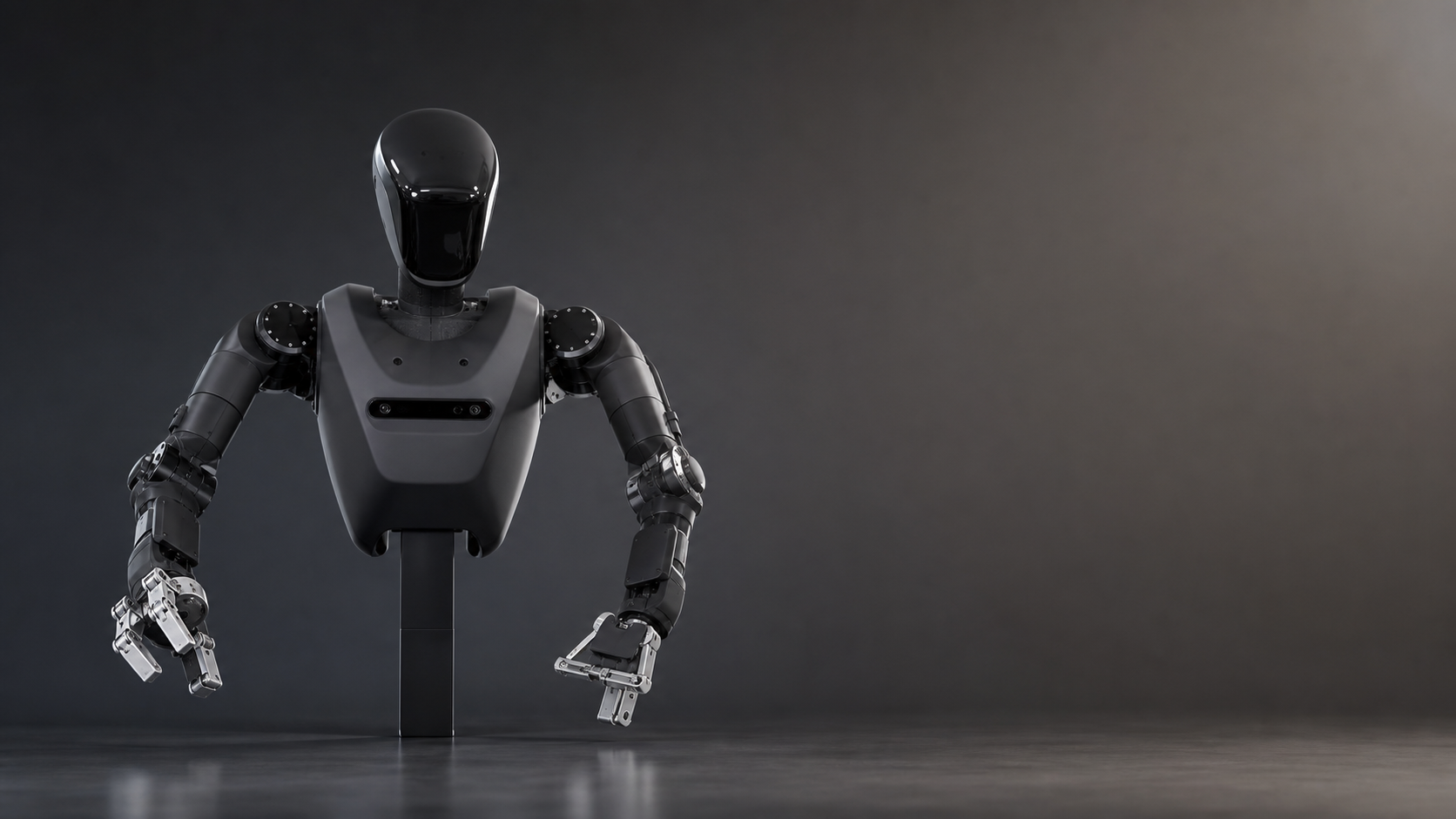
Boardwalk Robotics introduced Alex on August 22, 2024, bringing a long-running Pensacola humanoid lineage into a commercial upper-body robot for manufacturing, logistics, food processing and maintenance. The robot starts from a torso, arms and task-matched base, keeping the first product close to manipulation work before the company tries to sell a walking system.
The Lineage
The company sits near the robotics program at IHMC, where humanoid work has moved through Nadia and Alex. Nadia was built with IHMC, Boardwalk Robotics, Morfey and H4 Labs around high range of motion, composite structures and autonomous or semi-autonomous behavior in urban environments. IHMC says the newer Alex platform builds on Nadia with custom quasi-direct-drive actuators, onboard computation, perception and power, with funding from the Office of Naval Research, Army Research Laboratory and Army Data Analysis Center.
Michael Morin previously worked on Barrett Technology's WAM Arm and co-founded Vicarious Surgical. Brandon Shrewsbury led humanoid software and controls work at IHMC. Robert Griffin, an IHMC senior research scientist, is listed as a technical adviser. Boardwalk's commercial path comes from people who had already spent years with arms, controls and high-degree-of-freedom humanoid hardware before Alex became a product.
Alex
Boardwalk's Alex applies that background to an upper-body system that can be mounted on a pedestal or mobile base, with the lower half chosen around the job. The company disclosed pilot work, commercial partner selection and immediate research availability, placing the robot between lab hardware and a still-unproven industrial product.
The first work areas are sanding, handling, food processing, maintenance and related tasks where reach, tool use, fixture access and safe arm motion can be evaluated inside constrained industrial cells. Alex does not need to imitate the complete human body for that first test. It needs to make upper-body humanoid manipulation useful enough to beat the current mix of fixed automation, custom tooling and manual labor.
Maturity
Boardwalk has disclosed product direction, pilot activity and research availability. Customer names, fleet size, pricing, production volume and service economics have not been disclosed. The company is still early, with the clearest near-term proof likely to come from named industrial pilots where upper-body humanoid manipulation can be measured against existing automation and manual work.
Have a robotics update Korthos should review? Send news, deployments, product releases, funding rounds, research, or media to tips@korthos.xyz or reach out on X at @agkorthos.
- Boardwalk RoboticsCompany
- AlexProduct