
Boardwalk Robotics is turning upper-body humanoid manipulation into an industrial pilot layer
Alex brings IHMC humanoid lineage into Boardwalk's upper-body commercial robot, with early work focused on industrial manipulation before legged deployment.
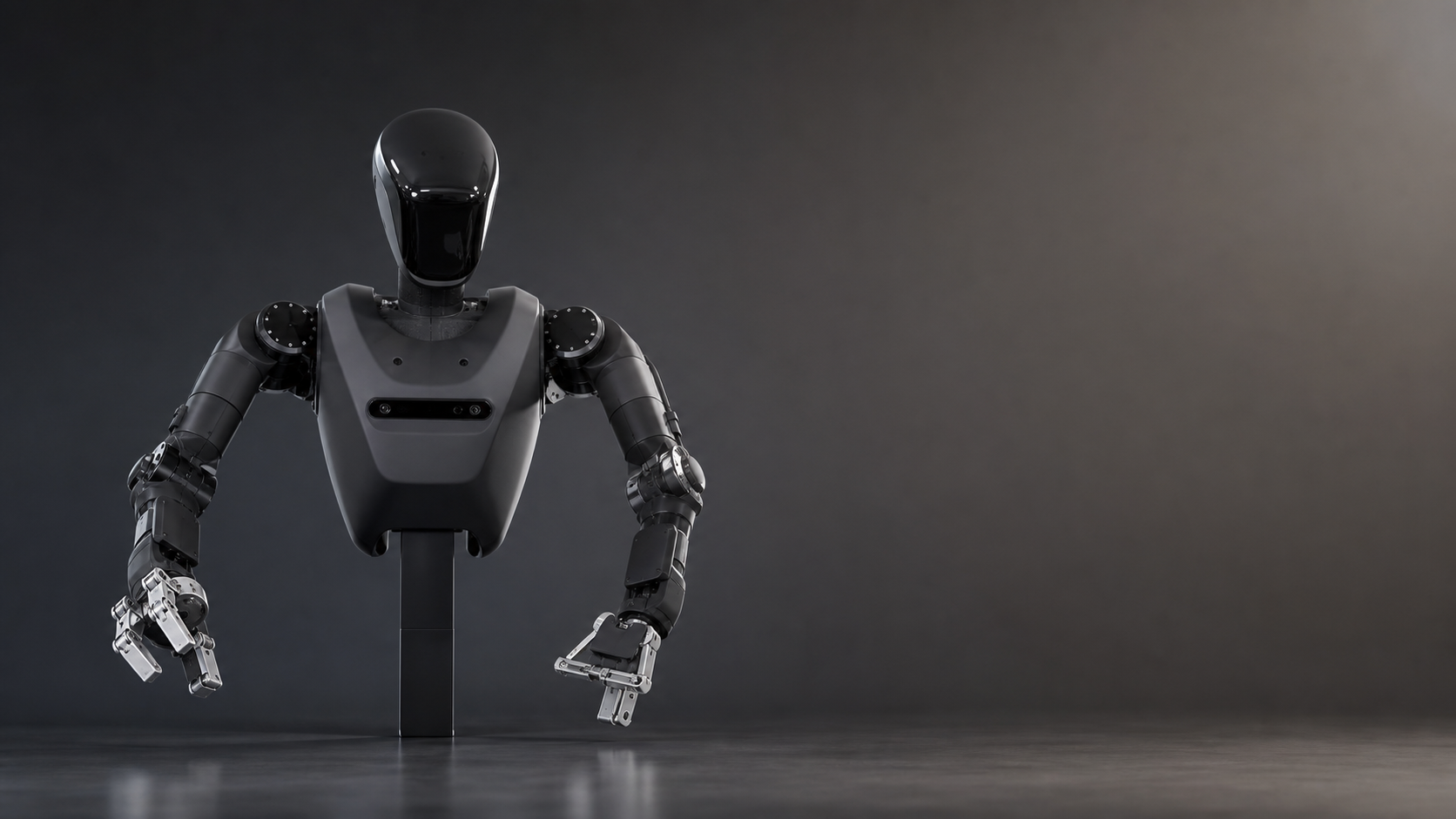
Boardwalk Robotics introduced Alex in August 2024 as an upper-body humanoid for industrial work, starting with the parts of the human form that matter most for manipulation: torso, arms, reach, tool use, and a task-matched base. The product direction is deliberately narrower than a full walking humanoid. Boardwalk is trying to prove that human-scale upper-body motion can be useful in manufacturing, logistics, food processing, sanding, and maintenance before asking customers to absorb the cost and reliability burden of legs.
The company sits close to the Institute for Human and Machine Cognition humanoid lineage. IHMC describes Alex as building on Nadia, with custom quasi-direct-drive actuators, onboard computation, perception, and power, and prior support from the Office of Naval Research, Army Research Laboratory, and Army Data Analysis Center. That lineage gives Boardwalk more technical depth than a launch-only hardware company: the product comes out of years of work on high-range-of-motion humanoid platforms rather than a sudden industrial robot pivot.
The team context is material. CEO Michael Morin previously worked on Barrett Technology's WAM Arm and co-founded Vicarious Surgical. Brandon Shrewsbury led humanoid software and controls work at IHMC, and IHMC senior research scientist Robert Griffin is listed as a technical adviser. Those backgrounds point toward arms, controls, teleoperation, and high-degree-of-freedom hardware: the parts of Alex that need to work before the company can claim industrial relevance.
Alex can be mounted on a pedestal or mobile base, with the lower half chosen around the job. That makes the first commercial surface easier to evaluate. A customer does not have to buy a general-purpose person-shaped machine; it can test whether upper-body humanoid manipulation improves sanding, handling, fixture access, tool reach, or maintenance work inside a bounded cell. The operating questions are task success, intervention rate, safety envelope, tool changeover, and whether the robot beats the existing mix of fixed automation, custom fixtures, and manual labor.
The competitive field includes industrial arm integrators, mobile manipulation systems, humanoid developers such as Figure, Apptronik, and Agility Robotics, and research-rooted upper-body systems built for teleoperation or manipulation. Boardwalk's distinction is the upper-body industrial entry point: it is not trying to sell an entire walking labor replacement first, but a manipulation platform that can be fitted to the work surface.
Public material still does not disclose named industrial customers, fleet size, pilot duration, pricing, uptime, or measured productivity against incumbent methods. The strategic test is whether Boardwalk can turn humanoid arm research into a customer-qualified industrial tool. If Alex proves useful in constrained workflows, Boardwalk becomes a specialist in human-scale manipulation before the broader humanoid market settles on which body shapes customers actually need.
Have a robotics update Korthos should review? Send news, deployments, product releases, funding rounds, research, or media to tips@korthos.xyz or reach out on X at @agkorthos.
- Boardwalk RoboticsCompany
- AlexProduct
Track the machine economy
Regular Korthos briefings on robotics, drones, physical AI, supply chains, funding, product launches, and the companies shaping the stack.