Corvus Robotics is building lights-out inventory drones around warehouse visibility
MIT News profiled Corvus Robotics in December 2024 as a warehouse inventory drone company built around 24/7 barcode scanning in GPS-denied facilities.
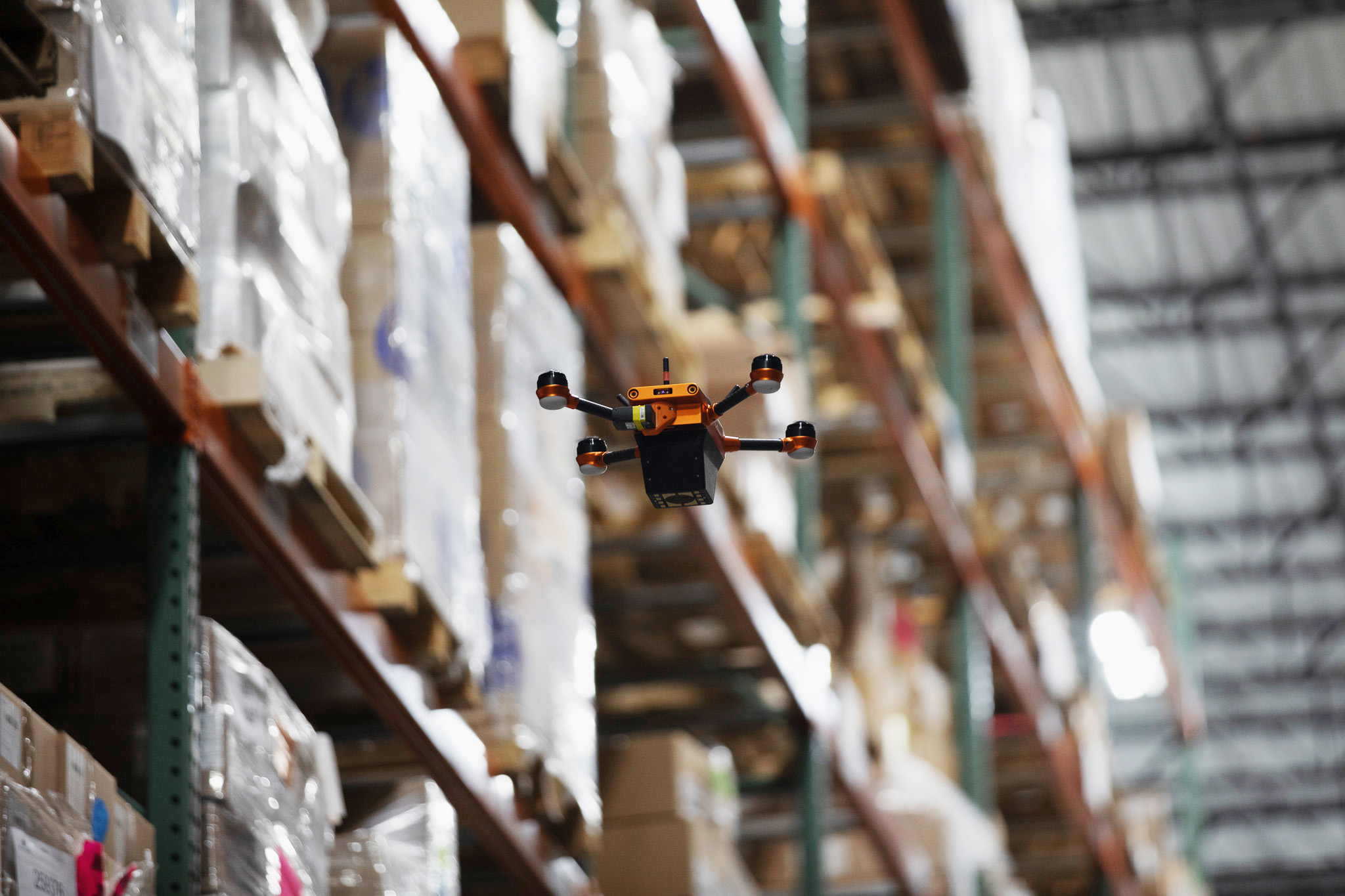
MIT News profiled Corvus Robotics on December 20, 2024 as a warehouse inventory drone company using autonomous flight to track pallets in GPS-denied facilities. The profile said Corvus One scans barcodes, records product locations, and can operate in lights-off warehouse conditions.
Corvus was founded by Mohammed Kabir, an MIT alumnus whose company is built around one of the least glamorous but most expensive warehouse problems: physical inventory drift. Warehouse systems know what should be in a location. Operators need to know what is actually there, whether a pallet moved, whether a barcode is blocked, and whether order execution depends on a record that is already stale.
The product is purpose-built for that gap. MIT News described Corvus One as a fully autonomous warehouse inventory drone with 14 cameras and AI navigation. The operating environment matters: indoor warehouses are GPS-denied, rack-heavy, barcode-dependent, and often built around narrow aisles where workers, forklifts, and pallets change the visual scene throughout the day.
Corvus positions the system for repeated scanning rather than occasional audit work. Its public material references Staci Americas as a lights-out inventory customer, giving the company a named customer surface even though reviewed material does not provide a full operating case. The core claim is not that drones are novel; it is that inventory capture can happen more often and with less disruption when the scanner moves autonomously through the building.
The competitive field includes Gather AI drones, Vimaan's forklift-mounted StorTRACK, manual cycle counting, fixed scanning infrastructure, RFID programs, and WMS vendors trying to improve physical-data fidelity. Corvus's distinction is lights-out aerial scanning for barcode-level warehouse visibility, not generic drone inspection.
The proof boundary is facility-level economics. Public sources show an MIT technical profile and a named customer reference, but they do not disclose accuracy by site, uptime, drone count, payback, renewal, or contract terms. Corvus's strategic bet is that warehouse inventory becomes a continuous sensing workflow, with drones acting as the moving data layer for facilities that cannot afford stale location records.
Have a robotics update Korthos should review? Send news, deployments, product releases, funding rounds, research, or media to tips@korthos.xyz or reach out on X at @agkorthos.
- Corvus RoboticsCompany
Track the machine economy
Regular Korthos briefings on robotics, drones, physical AI, supply chains, funding, product launches, and the companies shaping the stack.