DEEP Robotics is turning water plants into a quadruped inspection market
The Lynx M20 water utility solution with WeiPaiGe packages sensors, gas detection, robotic-arm capability, reporting software, and plant-specific algorithms for 24/7 inspections.
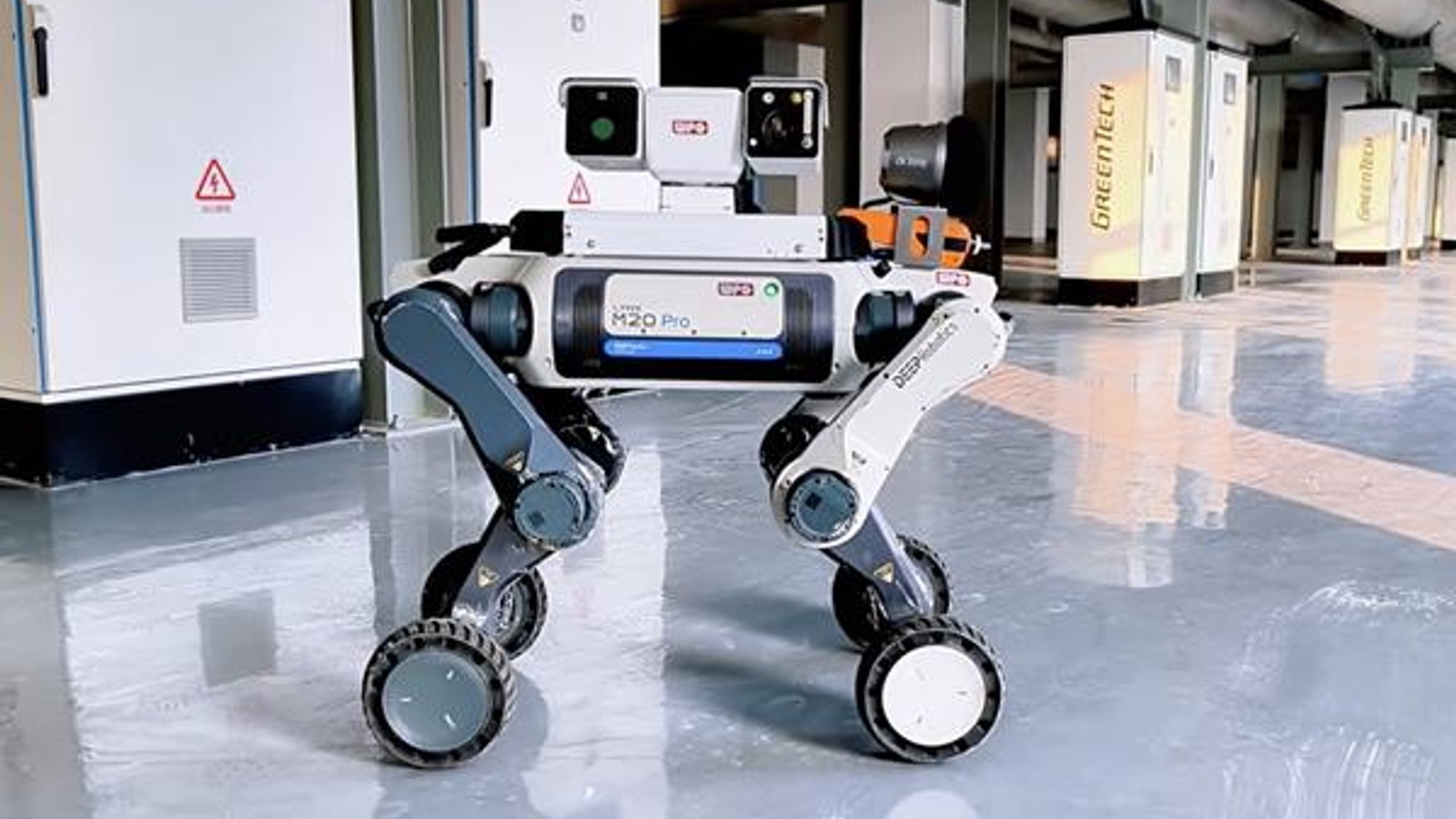
DEEP Robotics launched a water utility inspection solution on April 21, 2026 with water-sector partner WeiPaiGe. The solution uses the Lynx M20 wheeled-legged robot for full-scenario inspection across electrical systems, instrumentation, equipment, operations, and security inside water treatment plants.
DEEP Robotics was founded in 2017 in Hangzhou and builds legged robotic systems for industrial inspection, emergency response, security, and complex terrain. Its public product line includes quadrupeds and humanoids, but the water-utility event is more specific than a general robot-body launch. It packages a robot, sensors, software, and plant workflow into a vertical inspection solution.
Water plants are a useful test surface for legged robotics because the work is repetitive, hazardous in places, and distributed across hard-to-standardize infrastructure. Manual inspection can miss readings, vary by operator, and expose workers to weather, electrical rooms, chemical areas, wet surfaces, and gas or fire risks. The value of the robot depends less on walking alone than on whether it can turn inspection routes into reliable readings, alerts, work orders, and traceable reports.
DEEP Robotics says the water utility system combines the robot body with a dual-sensor PTZ camera, gas detector, multi-channel audio pickup, robotic arm, and other modules through ROS and bus communication. It also describes a water-scenario algorithm lab that combines vision, acoustics, olfaction, and behavior analysis, plus an inspection management system for mapping, task deployment, work-order assignment, autonomous inspection, and report generation.
The inspection claims are practical. In electrical and instrumentation scenarios, the Lynx M20 reads pressure gauges, flow meters, water-quality instruments, indicator lights, knob positions, equipment screens, ambient temperature, and gas concentrations. In equipment areas, it identifies floating debris, alum floc conditions, blocked passages, metering-pump status, valve positions, floor liquid accumulation, and pipeline crystallization. For operations and security, the robot monitors flooding, corrosion, abnormal high temperatures, smoke, and fire.
The proof boundary is still vertical-solution evidence. Public material does not disclose named water-plant customers, fleet size, uptime, false-positive rates, report accuracy, maintenance cost, or worker-intervention rates. The WeiPaiGe partnership and detailed scenario coverage create a stronger signal than a generic inspection demo, but they do not yet prove scaled utility adoption.
The competitive field includes ANYbotics and Energy Robotics in industrial inspection, Boston Dynamics Spot deployments with utility payloads, Unitree-based integrator solutions, ExRobotics for hazardous sites, and conventional fixed sensors tied into SCADA or plant asset-management systems. DEEP Robotics' distinction is the wheeled-legged hardware paired with a water-specific inspection stack, where mobility, sensing, reporting, and task management are bundled for the facility operator.
The launch positions DEEP Robotics around infrastructure inspection as a workflow problem. If water utilities can use legged robots to turn routine patrols into structured operational data, the Lynx M20 becomes less of a robot demonstration and more of a mobile inspection node for facilities that need safer, more consistent coverage across equipment, meters, and hazards.
Have a robotics update Korthos should review? Send news, deployments, product releases, funding rounds, research, or media to tips@korthos.xyz or reach out on X at @agkorthos.
- Deep RoboticsCompany
Track the machine economy
Regular Korthos briefings on robotics, drones, physical AI, supply chains, funding, product launches, and the companies shaping the stack.