
Dyna Robotics is building DYNA-1 foundation models into laundry folding
DYNA-1, 24-hour folding operation, and 120 million dollars in financing put Dyna Robotics on a narrow dexterity benchmark.
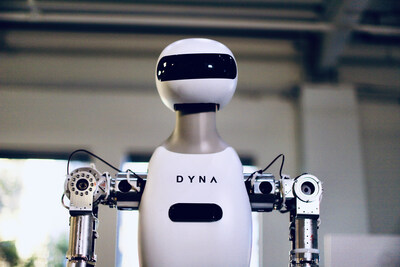
Dyna later raised $120 million in September 2025 to advance robotic foundation models. The financing gives the company capital to keep building model capability, but the public proof surface remains bounded: laundry folding is a contact-rich deformable-material task, not evidence that DYNA-1 generalizes across industrial, logistics, or household manipulation.
Laundry folding is a reasonable benchmark because cloth changes shape after every contact. A robot has to identify edges, recover from folds, deal with occlusion, and keep the task moving when the object does not behave like a rigid part. That makes the task more meaningful than a scripted pick-and-place demo, while still far narrower than general dexterity.
The source record is thin. Public material does not disclose paying customers, cycle time per garment, fold error rate, intervention frequency, hardware bill of materials, deployment count, service response time, unit pricing, production uptime, or founder technical background. DYNA-1 should therefore be treated as a model and benchmark signal rather than commercial deployment proof.
The competitive field includes Physical Intelligence, Skild AI, Google DeepMind robotics, NVIDIA Isaac and GR00T, Covariant/Amazon robot foundation model work, Figure Helix, and textile-handling specialists such as sewts. Dyna's distinction is a public deformable-material benchmark around continuous laundry folding, but it still needs customer and performance data to move beyond model launch credibility.
The strategic question is whether DYNA-1 can turn a narrow dexterity benchmark into reusable manipulation capability. If the model reduces retraining across more deformable and contact-rich tasks, Dyna becomes part of the foundation-model layer for robots that need hands-on skill. Until then, its strongest public story is capital plus a 24-hour folding signal, not proven deployment economics.
Have a robotics update Korthos should review? Send news, deployments, product releases, funding rounds, research, or media to tips@korthos.xyz or reach out on X at @agkorthos.