
Gideon is turning vision-based AMRs toward autonomous trailer work
Gideon followed DB Schenker pallet-handling deployment proof and a $31 million Series A with Trey, an autonomous forklift for trailer loading and unloading.
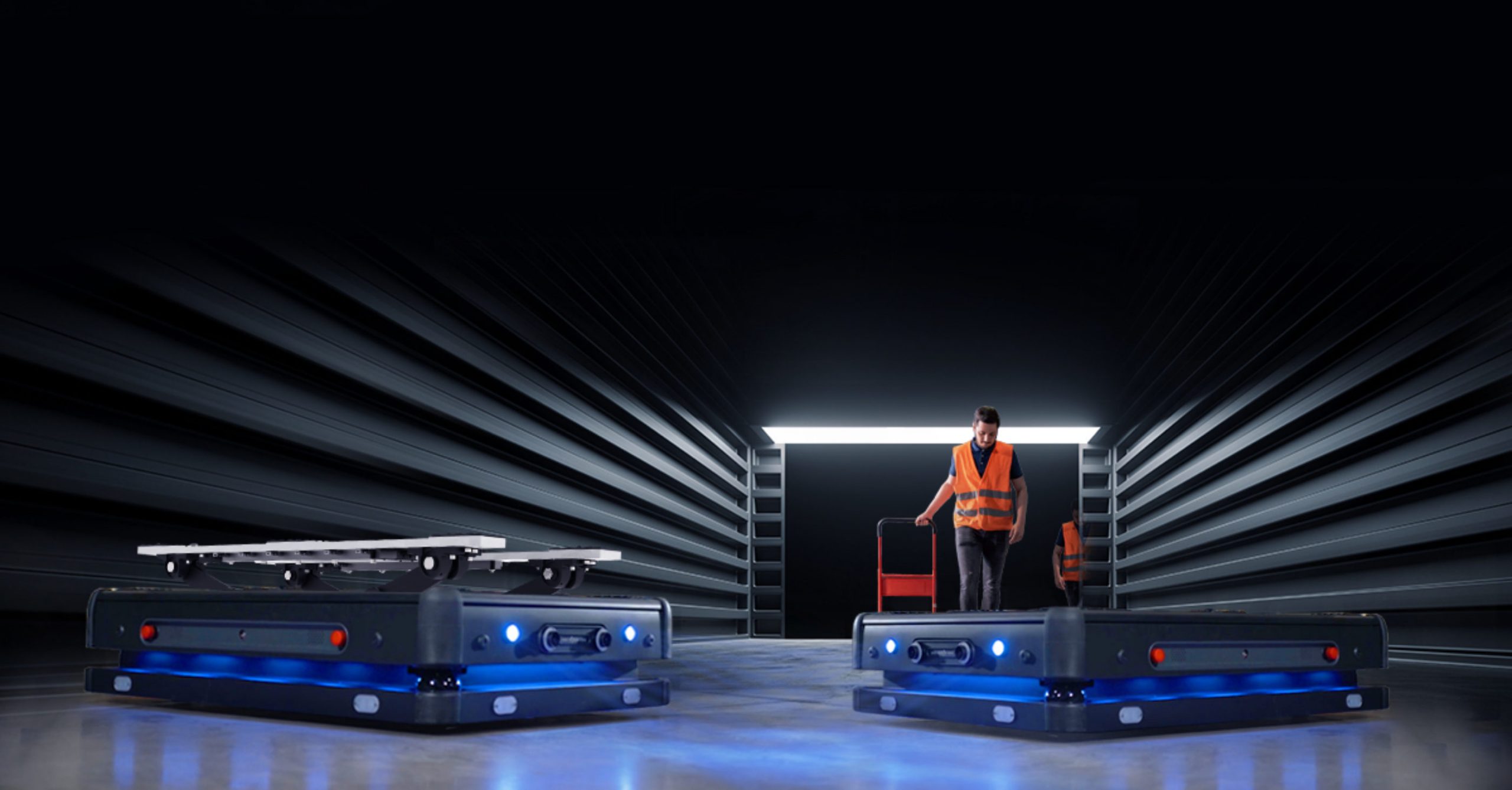
Gideon launched Trey on April 21, 2022 as an autonomous forklift for loading and unloading pallets. The company claimed Trey could save more than 80 percent of a worker's time, but the more important signal is the direction: Gideon was moving vision-based autonomy from warehouse transport into the tighter, messier geometry of trailer loading.
DB Schenker gives Gideon its strongest pre-Trey proof. At Leipzig, DB Schenker deployed three Gideon robots inside a 125,000-square-meter supply center serving a German automotive customer. Packaging-material replenishment came from packing-station requests, a structured workflow that validated the autonomy stack in live logistics before the company pushed toward dock work.
The DB Schenker deployment matters as perception evidence rather than direct Trey proof. Gideon says the robot handled sensitive obstacle-detection work, including low forklift forks, a known problem for systems relying only on 2D lidar. Trailer loading adds tighter spaces, pallet variability, dock traffic, lighting changes, trailer condition, and fewer escape paths for planning errors.
The $31 million Series A gave Gideon a strategic map before the Trey launch. Koch Disruptive Technologies led the round, with DB Schenker, Prologis Ventures, and Rite-Hite participating. Industrial operations, warehouse real estate, and loading-dock equipment all sit close to the trailer-loading problem Trey targets.
The competitive field includes autonomous forklift vendors, AMR companies moving into pallet handling, Pickle and Dexterity-style trailer automation, Seegrid and Fox Robotics in pallet movement, and dock-equipment providers that control the physical interface around trailers. Gideon's distinction is vision-first autonomy applied to pallet and trailer workflows, backed by strategic investors close to logistics sites and docks.
The proof boundary is product-specific. Public sources provide DB Schenker AMR proof and strategic funding context, but no confirmed Trey customer names, trailers per hour, paid deployment count, or site-level ROI. Gideon's strategic test is whether warehouse perception can carry into dock geometry without turning each trailer into a custom robotics project.
Have a robotics update Korthos should review? Send news, deployments, product releases, funding rounds, research, or media to tips@korthos.xyz or reach out on X at @agkorthos.
Track the machine economy
Regular Korthos briefings on robotics, drones, physical AI, supply chains, funding, product launches, and the companies shaping the stack.