
Glacier is building recycling robots into MRF sorting infrastructure
Glacier tied a 2025 $16 million Series A to Recology deployment, Amazon-backed sorting work, 60-pick-per-minute robots, and AI visibility for recycling streams.
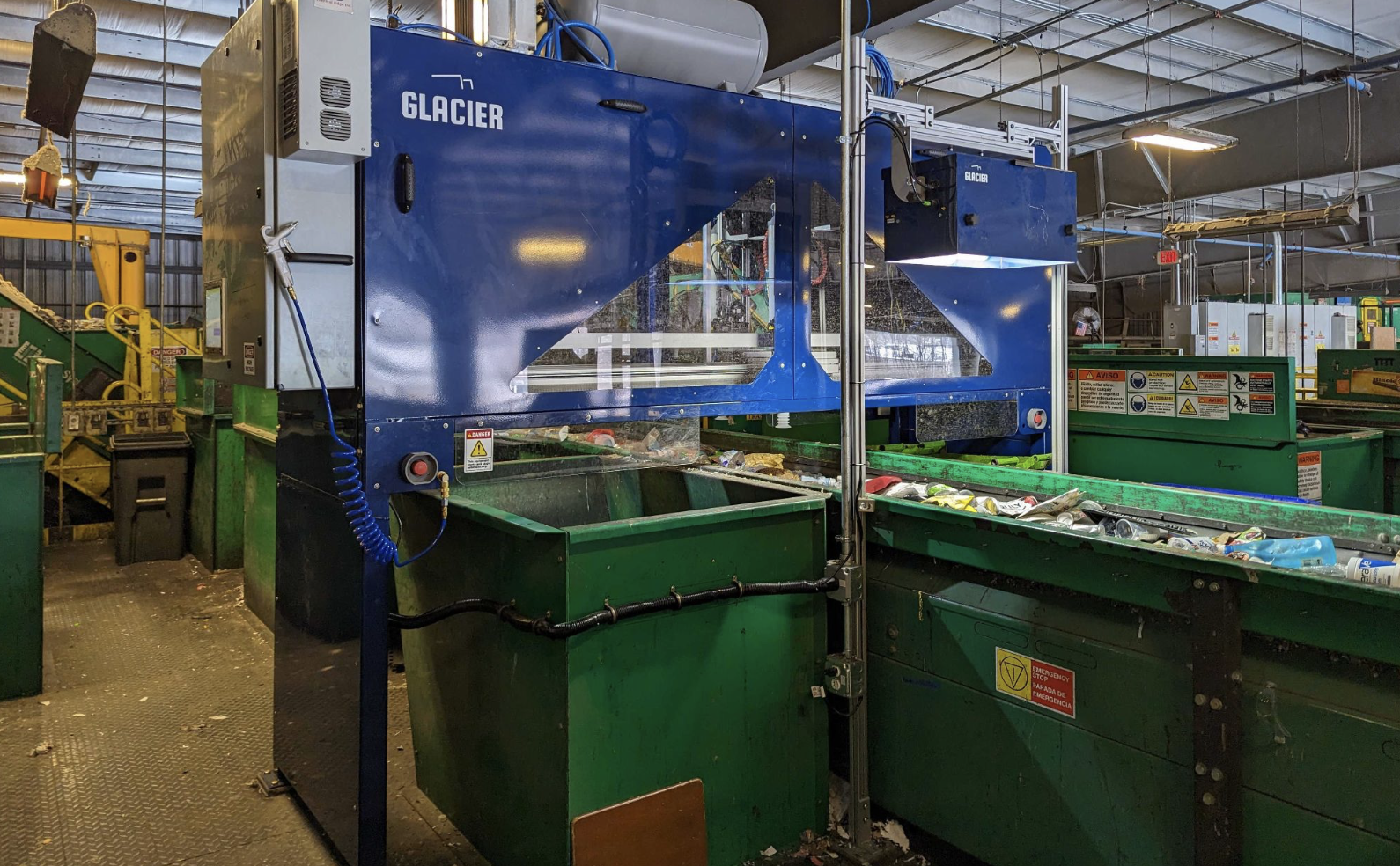
Glacier raised $16 million in Series A funding in April 2025 while tying the round to active recycling operations with Recology. The company says its AI robotic sorters are deployed at Recology's King County material recovery facility in Seattle, with earlier Recology installations in San Francisco and Portland. That gives the funding event a stronger base than a lab demo: Glacier is selling into the messy middle of municipal recycling, where mixed waste streams, contamination, labor availability, and commodity values all affect recovery economics.
Glacier was founded in 2019 in San Francisco by Rebecca Hu and Areeb Malik. Its product combines robot sorting cells with Glacier Vision, a recognition system that identifies and tracks more than 70 material categories across recycling streams. The company reports robots running at up to 60 successful picks per minute and 95% uptime across customer sites. Those are company-reported operating claims, but they are the right kind of claims for this market: sorting speed, availability, and material visibility determine whether a robot creates useful capacity inside an MRF rather than adding another maintenance burden.
The Recology relationship also shows why Glacier is not only pitching a robotic arm. A sorter can remove target material, but MRF operators also need to know what is moving through the line, where contamination appears, and which streams are losing value. Glacier frames AI visibility as part of the product because recycling facilities need better data on composition and recovery, not just a faster picker at one belt position.
Amazon's Climate Pledge Fund had already backed Glacier in 2024, alongside NEA, before the Series A. Amazon later described a pilot with Glacier around bio-based and biodegradable plastics, a category that creates problems for conventional recycling systems because packaging can look similar while requiring different handling paths. That work does not prove broad commercial adoption by itself, but it shows Glacier being pulled toward packaging-recognition problems that large retailers and logistics networks care about.
The competitive field includes AMP Robotics, EverestLabs, Machinex sorting systems, TOMRA optical sorters, Bollegraaf, Greyparrot's waste analytics, and conventional manual sorting operations. Glacier's distinction is the combination of robotic picking and facility-wide material intelligence, aimed at operators that need both recovered volume and better visibility into what their lines are actually processing.
Public material still leaves limits around customer economics. Glacier does not disclose site-by-site payback periods, maintenance cost, long-term part replacement rates, customer renewal terms, or independently audited recovery uplift. The Series A nevertheless positions Glacier around a real infrastructure constraint: recycling facilities need higher-quality sorting without assuming they can hire their way out of the problem. If Glacier can keep robots reliable while turning MRF data into operating decisions, it becomes less of a recycling robot vendor and more of a visibility layer for municipal waste recovery.
Have a robotics update Korthos should review? Send news, deployments, product releases, funding rounds, research, or media to tips@korthos.xyz or reach out on X at @agkorthos.
Track the machine economy
Regular Korthos briefings on robotics, drones, physical AI, supply chains, funding, product launches, and the companies shaping the stack.