HAI Robotics is building HaiPick Climb into high-density tote ASRS
HaiPick Climb, 45,000 totes per 1,000 square meters, and compact climbing robots give HAI Robotics a dense warehouse-storage path.
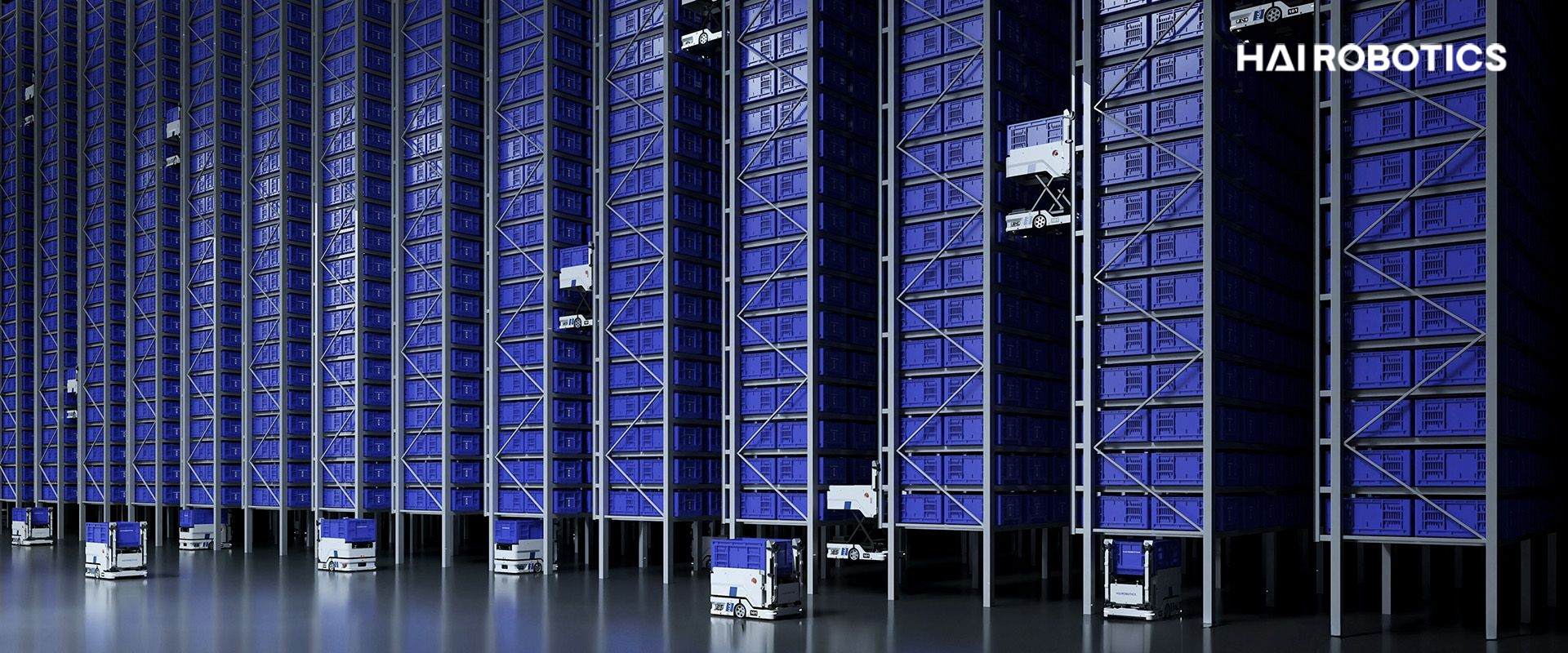
HAI Robotics upgraded HaiPick Climb in 2026 around a concrete density claim: up to 45,000 totes within a 1,000 square meter footprint. The company positions the system for warehouses that need more SKU density without paying for a new building or a full facility rebuild.
The HaiPick Climb product page describes a double-deep design powered by HaiClimber robots. Robots move across aisles, racks, and vertical levels to retrieve totes and deliver them to workstations in under two minutes. HAI also describes HaiVest as a wearable safety layer that lets teams perform maintenance inside the system without stopping all ongoing operation.
The product is an ASRS answer to a familiar warehouse constraint: floor space is expensive, SKU counts keep rising, and older shelving can trap labor in long travel paths. HaiPick Climb shifts the value proposition from fast horizontal robot travel to vertical density, controlled access, and workstation delivery.
HAI Robotics was founded in 2016, with founder and CEO Chen Yuqi linked to the company?s early case-handling robot system. Earlier funding material described HaiPick robots, HaiQ software, and workstations as the base of the goods-to-person system. The 2026 Climb update extends that ACR lineage into rack-climbing storage rather than a separate automation category.
The competitive field includes AutoStore, Exotec, Geekplus, Swisslog, Dematic, Kardex, OPEX, and shuttle-based ASRS providers. HAI?s distinction is the autonomous case-handling robot architecture: compact robots and modular racking designed to increase density without forcing every customer into one cube-grid model.
The proof boundary is still product and architecture evidence more than site-level proof. Public material discloses the 45,000-tote density claim, double-deep storage, under-two-minute workstation delivery language, compact robots, narrow aisles, and maintenance access. It does not disclose customer-level throughput, uptime, tote damage rate, installation time, intervention frequency, paid site count for the upgraded system, pricing, or renewal rates.
HaiPick Climb positions HAI Robotics around storage density as the bottleneck inside fulfillment automation. If the upgraded system can deliver high-density tote access without turning maintenance and exception handling into the new constraint, HAI can sell vertical warehouse capacity as a modular alternative to large ASRS rebuilds.
Have a robotics update Korthos should review? Send news, deployments, product releases, funding rounds, research, or media to tips@korthos.xyz or reach out on X at @agkorthos.
- Hai RoboticsCompany
Track the machine economy
Regular Korthos briefings on robotics, drones, physical AI, supply chains, funding, product launches, and the companies shaping the stack.