
HARIBIT turns Beijing Institute of Technology humanoid research toward application labs
Haribit links a full-size commercial robot to the long BHR humanoid program at Beijing Institute of Technology.
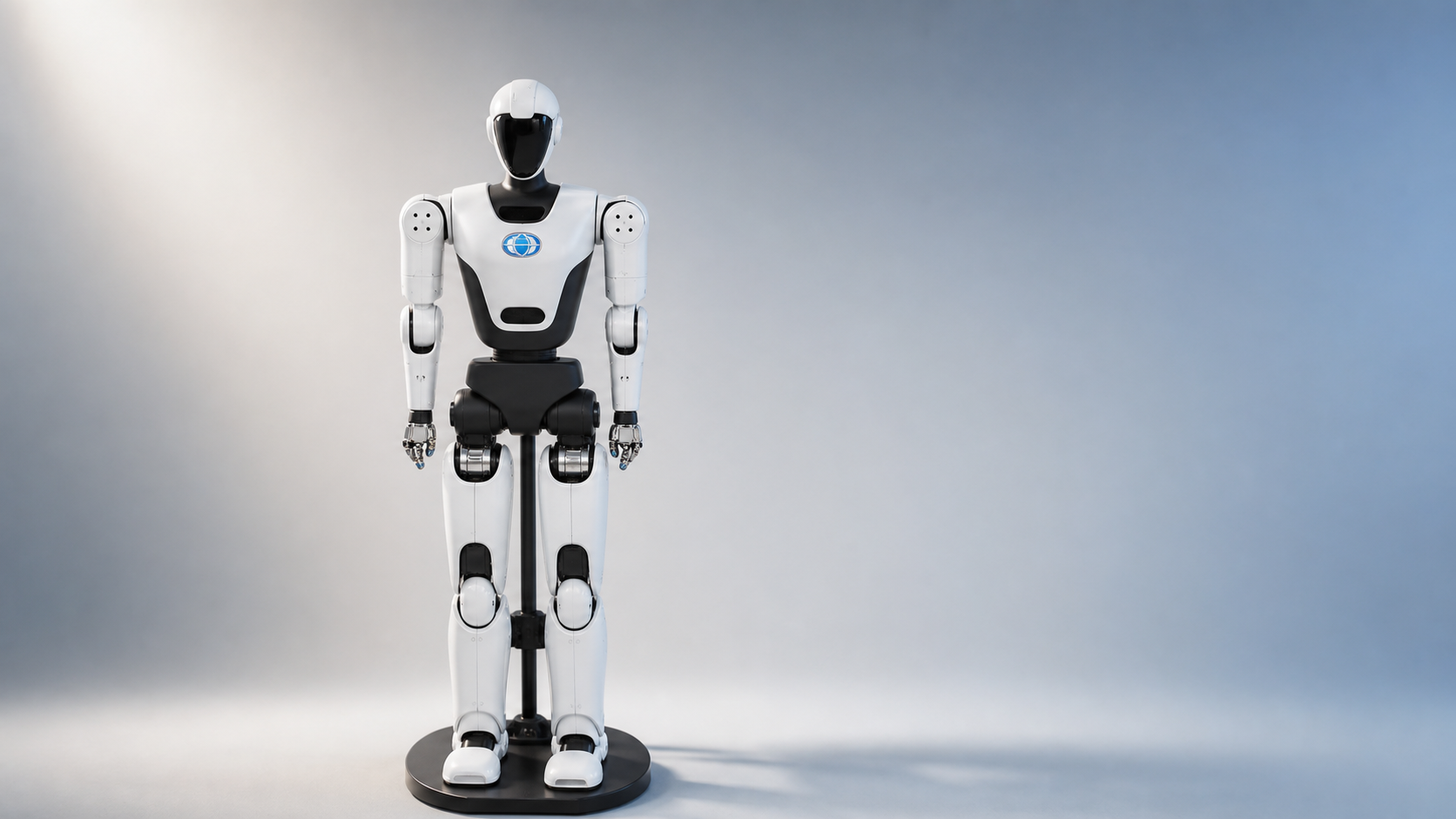
iSoftStone and HARIBIT inaugurated the Tianhui Special Humanoid Robot Laboratory in September 2024, naming emergency rescue, firefighting, industrial and education scenarios as the first application areas. The lab anchor places HARIBIT near application-specific humanoid development with a named partner, scenario list and first concept model on display.
HARIBIT is tied to Beijing BIT Huahui Intelligent Technology, a Beijing company built around commercialization of humanoid robotics work from Beijing Institute of Technology. Its Haribit robot is listed with a 170 cm height, 55 kg weight, two-hour runtime, 200 mm step capability and 20 degree slope capability. The same product material points to high-precision electric actuation, onboard compute, perception sensors, articulated hands and task areas such as inspection, monitoring, logistics support, research and machine tending.
A long academic lineage
Beijing Institute of Technology began the BHR humanoid sequence in the early 2000s, with BHR-1 followed by later generations that added walking, more degrees of freedom, facial expression work, table-tennis demonstrations and multimodal movement research. HARIBIT chairman Zhang Weimin is named in company materials as part of that research lineage, and the iSoftStone lab announcement placed Zhang alongside HARIBIT vice chairman Liu Xiangdong and general manager She Haotian at the signing ceremony. Haribit therefore enters the market with an academic engineering inheritance that predates the current humanoid startup cycle.
HARIBIT is packaging that research base through a company structure, named product page and partner laboratory. The first use areas are still broad, but they are clustered around institutions and controlled environments: education labs, industrial demonstrations, inspection tasks, logistics support and emergency-response research. Supervised institutional settings can absorb narrower operating envelopes while the company proves mobility, manipulation and reliability.
Why the iSoftStone lab matters operationally
iSoftStone brings a different type of leverage to the partnership. The company has positioned robotics work around software, embodied intelligence and application development, including a separate humanoid collaboration with AGIBOT earlier in 2024. Pairing HARIBIT with a named special-humanoid lab gives the hardware a route into scenario design, software integration and customer-facing pilots where a standalone robot maker would otherwise need to build every relationship itself.
The rescue and firefighting language should still be treated carefully. Heat, smoke, debris, communications loss and unstructured terrain punish humanoids that look capable in a lab. The more immediate value may come from controlled training, inspection, education and industrial demonstrations where the robot can run supervised tasks while the lab collects data on mobility, manipulation and operator workflow.
What would make the platform easier to judge
Haribit has clearer technical claims than many early humanoid entries, especially on size, weight, runtime and terrain limits. The public evidence is thinner on deployed task performance. Useful next disclosures would include repeated lab trials, customer pilots, manipulation accuracy, runtime under loaded work, maintenance intervals and the exact sensing stack. HARIBIT has credible research inheritance and an application-lab route; public operating evidence remains the missing piece.
Have a robotics update Korthos should review? Send news, deployments, product releases, funding rounds, research, or media to tips@korthos.xyz or reach out on X at @agkorthos.