Keenon Robotics is building DINERBOT T10 into restaurant delivery work
DINERBOT T10, four stereo-vision sensors, and tray-detection pickup give Keenon a restaurant delivery robot anchor.
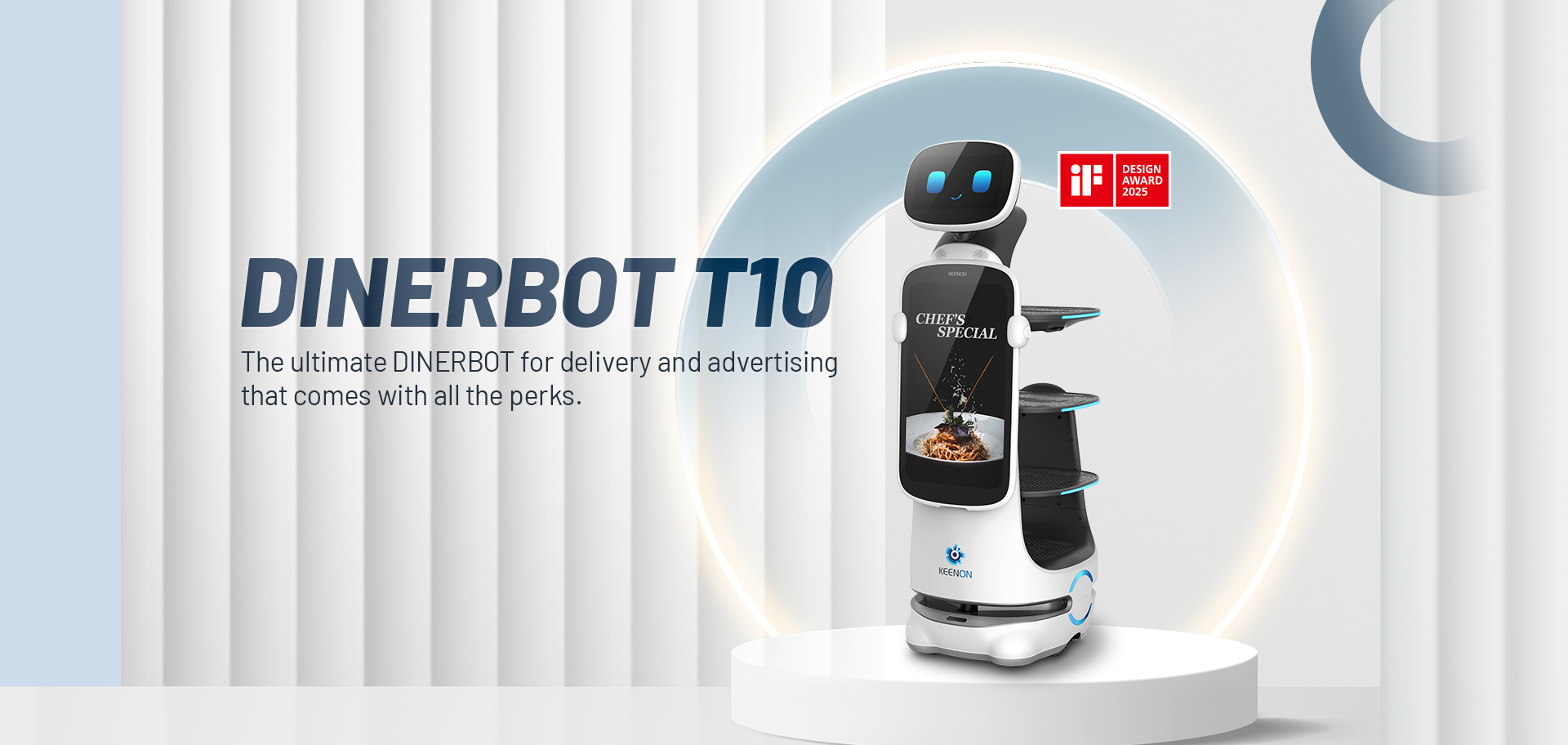
Keenon Robotics positions DINERBOT T10 for restaurant delivery work, with tray detection, tray lights, on-screen guidance, and voice prompts for guest pickup. The robot is aimed at the front-of-house handoff where food has to arrive at the right table without adding confusion for diners or staff.
The navigation stack combines four stereo-vision sensors, VSLAM, and one RGB camera. DINERBOT T10 also uses a movable head, a 23.8 inch screen, and interactive buttons, turning the robot into both a delivery device and a table-side interaction surface.
Keenon also describes multi-robot dispatching for route planning across service tasks. Restaurants rarely need one robot forever parked on one route; they need a fleet that can avoid congestion, deliver multiple trays, and fit around servers who are still handling exceptions and customer service.
Keenon Robotics was founded in Shanghai in 2010 and is associated with founder Tony Li. The company has built a broad service-robot portfolio across restaurants, hotels, healthcare, and commercial spaces, giving DINERBOT T10 a place inside a larger service-robot distribution and support operation.
The competitive field includes Pudu Robotics, Bear Robotics, Richtech Robotics, Relay Robotics, SoftBank Robotics, OrionStar, and human runner workflows. Keenon?s distinction is breadth and volume in service robots, with T10 positioned as a more interactive restaurant model rather than only a tray-carrying platform.
Public material does not show table deliveries per shift, venue-level uptime, intervention frequency, customer retention, service response time, pricing, renewal terms, or restaurant labor baseline. The current proof is product capability and Keenon?s broader service-robot presence, not a named T10 customer deployment with operating metrics.
DINERBOT T10 tests whether restaurant delivery robots can become part of service choreography instead of rolling trays. If the interaction screen, tray detection, and fleet dispatch make handoffs smoother for staff and diners, Keenon can position restaurant robots as service infrastructure rather than dining-room spectacle.
Have a robotics update Korthos should review? Send news, deployments, product releases, funding rounds, research, or media to tips@korthos.xyz or reach out on X at @agkorthos.
Track the machine economy
Regular Korthos briefings on robotics, drones, physical AI, supply chains, funding, product launches, and the companies shaping the stack.