Mirsee Robotics is building MH3 mobile manipulation into an industrial humanoid layer
Mirsee Robotics is using MH3 to pursue a practical Canadian humanoid route: stable mobile manipulation, teleoperation and incremental autonomy for industrial sites with hard-to-staff work.
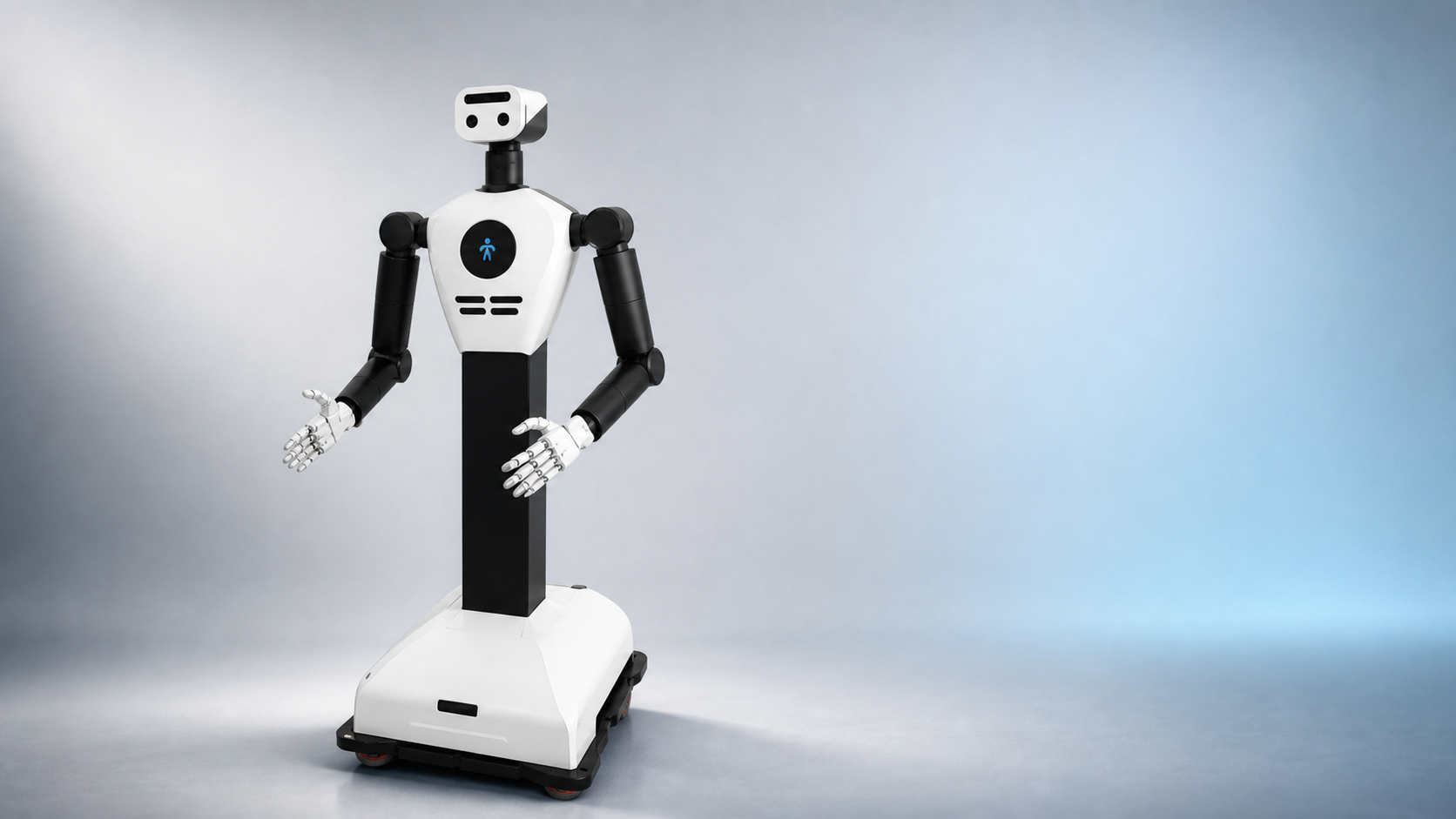
Mirsee Robotics has moved through humanoid hardware in stages: MH1 in 2021, MH2 in 2023, and MH3 as its 2025 generation. MH3 keeps the company on a practical industrial path by combining a mobile base, remote teleoperation, wireless charging, arms, hands, and an AI-control layer. The result is closer to supervised mobile manipulation than to a full-body humanoid labor replacement.
Mirsee is based in Cambridge, Ontario, and presents MH3 as a Canadian-built industrial humanoid platform. The shape is commercially relevant. A wheeled base reduces the mechanical risk of bipedal walking while preserving the pieces customers may actually need first: reach, manipulation, sensing, charging autonomy, and remote intervention across structured floors.
The product timeline shows the company working on supportability as much as appearance. Mirsee lists MH1 with six hours of runtime, 28 degrees of freedom, and remote teleoperation. MH2 added longer runtime, a heavier mobile base, and hot-swappable batteries. MH3 adds more degrees of freedom, wireless charging, and an AI layer. Those changes point toward endurance, operator workflow, and deployment maintenance rather than only a more dramatic robot body.
Industrial customers can evaluate MH3 through bounded workflow questions. Can it move between stations, handle a specific object, recover from common errors, charge without special handling, and give a remote operator enough awareness to intervene safely? Those are still hard questions, but they lead to measurable pilots with task limits, intervention rates, routes, and operating conditions.
The competitive field includes WorkFar, Reflex Robotics, Apptronik, Figure, Sanctuary AI, mobile manipulator integrators, and AMR-plus-arm systems used in factories and distribution centers. Mirsee's distinction is a source-limited but coherent Canadian product line focused on wheeled humanoid manipulation rather than a sudden one-off prototype.
Public details remain thin. Mirsee does not disclose named customers, site counts, intervention rates, uptime, pricing, support economics, or paid deployment status for MH3. The strategic test is whether the company can turn its hardware progression into one narrow customer workflow with visible operating data. If MH3 proves useful in a bounded industrial task, Mirsee becomes a credible Canadian entrant in supervised humanoid manipulation rather than another early humanoid build log.
Have a robotics update Korthos should review? Send news, deployments, product releases, funding rounds, research, or media to tips@korthos.xyz or reach out on X at @agkorthos.
- Mirsee RoboticsCompany
- MH3Product
Track the machine economy
Regular Korthos briefings on robotics, drones, physical AI, supply chains, funding, product launches, and the companies shaping the stack.