
Stanford ToddlerBot turns low-cost humanoid hardware into a learning platform
The open-source platform is built for policy learning, teleoperation and loco-manipulation with a compact body under $6,000.
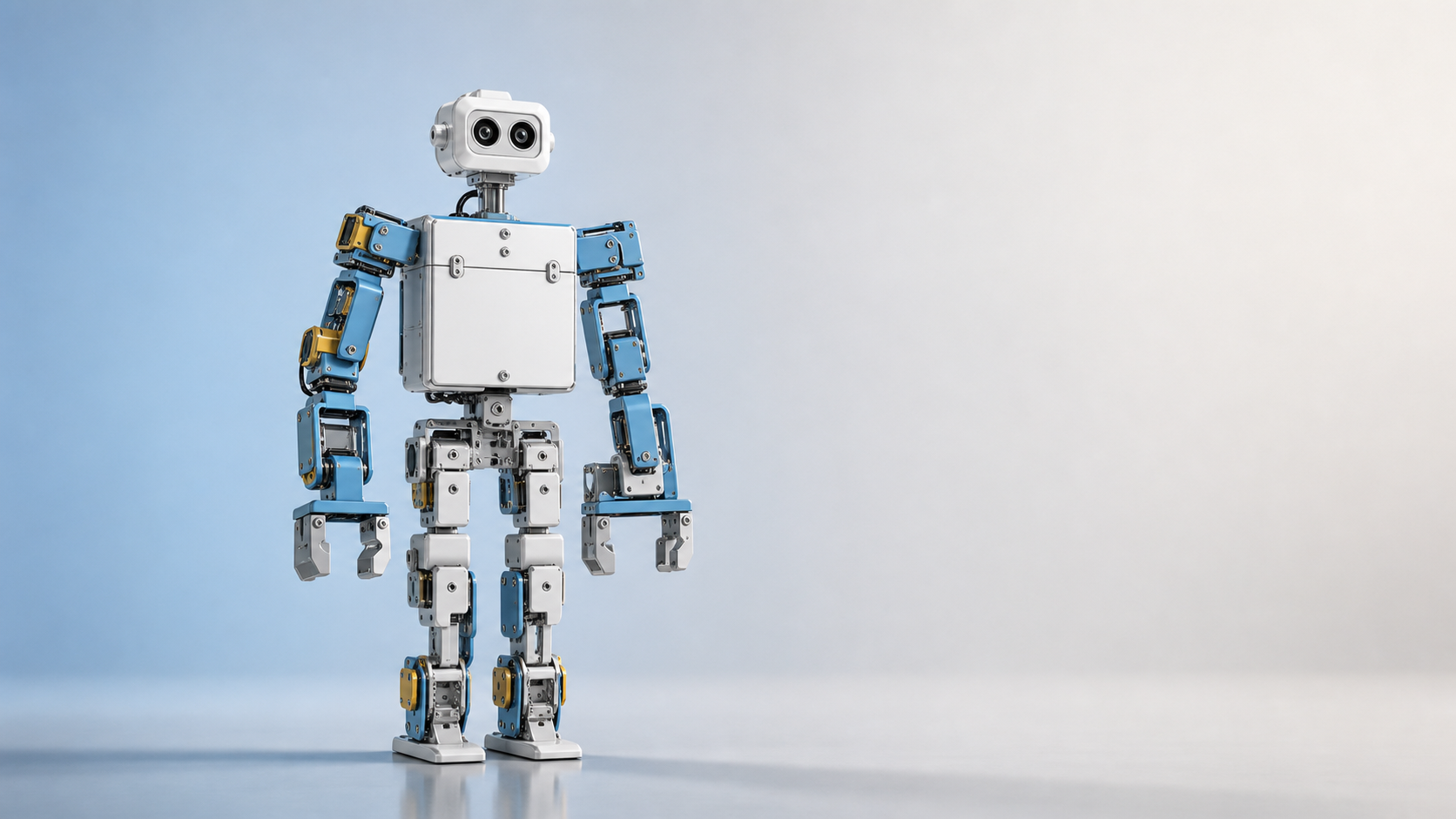
Stanford researchers Haochen Shi, Weizhuo Wang, Shuran Song and C. Karen Liu submitted ToddlerBot on February 2, 2025, as an open-source humanoid platform for policy learning and loco-manipulation. The project presents a 0.56 m, 3.4 kg robot built from 3D-printed parts and commercially available components, with total cost kept under $6,000.
The hardware was designed around the needs of learning-based robotics work. ToddlerBot supports simulation and real-world data collection, plug-and-play zero-point calibration, motor system identification for a digital twin and teleoperation for collecting demonstrations. The project materials also list a 2.0 release with crawling, faster walking, VR teleoperation and more dynamic behaviors, giving the platform a public development trail after the first paper.
A research robot shaped around reproducibility
ToddlerBot uses an intentionally compact body so researchers can test whole-body behavior with lower risk than a larger humanoid. The paper emphasizes the same practical constraints that often decide whether a research platform spreads: parts availability, maintenance difficulty, calibration, simulation transfer and the ability for another team to reproduce the build. The authors report a successful independent replication of the system, which is a stronger reproducibility claim than a single lab demonstration.
The design combines small humanoid proportions with task-oriented hands. The body includes a rectangular torso, camera head, speaker, microphones, Jetson Orin NX, battery, communication board and parallel-jaw grippers with compliant palms. The demonstrations cover arm span, payload, endurance, locomotion and collaborative toy-cleanup behavior with two robots. Low-cost hardware and data collection sit in the same build, so a lab can use ToddlerBot as a physical policy platform while keeping repair and replication within reach.
Have a robotics update Korthos should review? Send news, deployments, product releases, funding rounds, research, or media to tips@korthos.xyz or reach out on X at @agkorthos.
- Stanford UniversityCompany