
Cyberwave is funding a software layer for programmable physical automation
Cyberwave raised EUR 7 million to scale a robotics orchestration platform built around one API, sim-to-real workflows, and a digital-twin catalog.
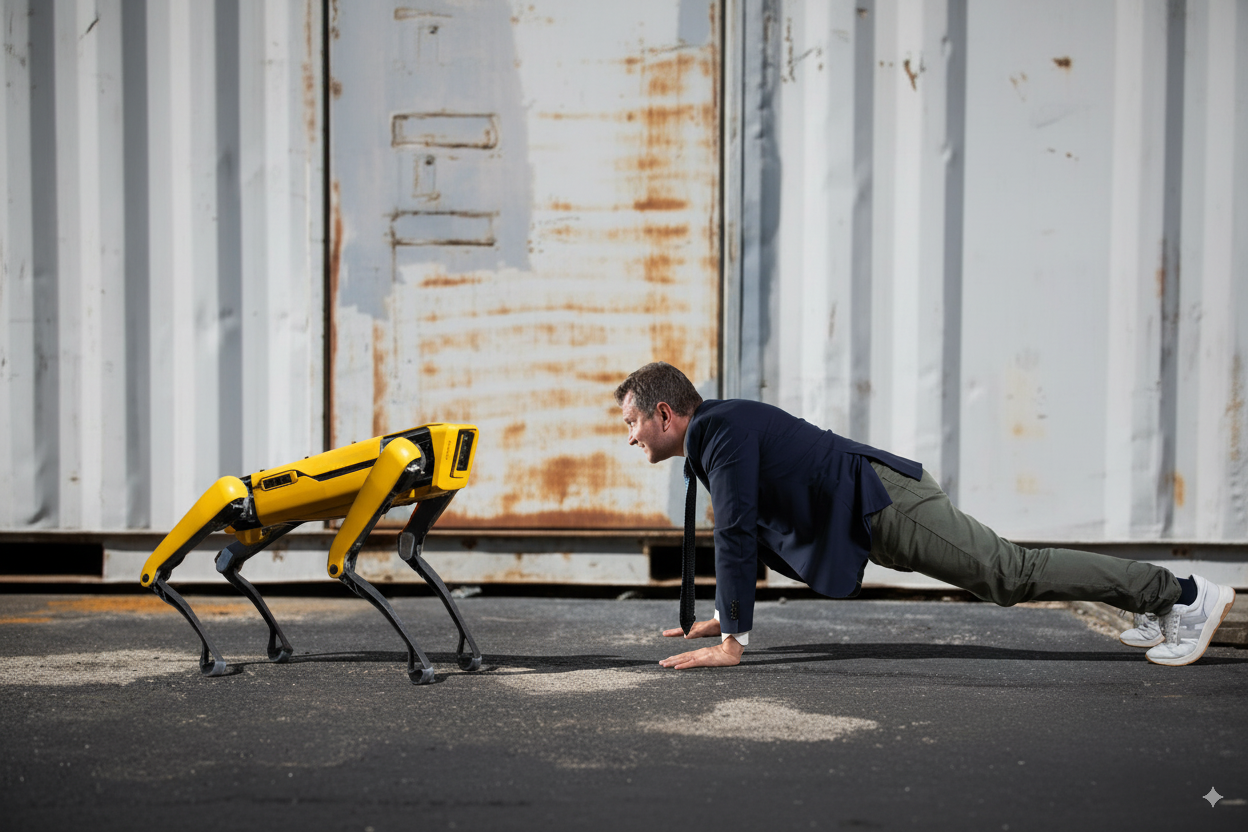
Cyberwave announced a EUR 7 million fundraise on October 8, 2025 to scale its infrastructure layer for intelligent automation. The round was led by United Ventures, with participation from The Techshop SGR, Vento, Pi Campus, and operators across AI-native manufacturing.
Cyberwave was founded in Milan in 2025 by Simone Di Somma and Vittorio Banfi, with offices in Milan, Zurich, and San Francisco. Di Somma previously founded Askdata, which was acquired by SAP, while Banfi previously built Botsociety and worked in product at Google. That founder context fits the company's software abstraction thesis: Cyberwave is less a robot OEM than an attempt to make physical automation programmable for developers and enterprises.
The company's premise is that physical automation remains too fragmented. Robots, sensors, cameras, and industrial devices often ship with their own APIs and integration assumptions. That makes mixed fleets hard to deploy and harder to change. Cyberwave is trying to make the physical layer more programmable through a single API, sim-to-real workflow, orchestration layer, and a catalog of digital twins for robots, sensors, cameras, and other assets.
The funding is aimed at deeper integrations with robotics and sensing platforms, expansion across sectors and geographies, and hiring across Milan, Zurich, and San Francisco. Cyberwave says its catalog already includes more than 50 assets across quadrupeds, drones, industrial arms, and smart sensors. The company is also building toward a community-style model where third-party developers can publish reusable skills for robotics use cases.
There is a practical deployment angle behind the software thesis. Cyberwave later announced a partnership with Apeiroon that brings private 4G and 5G network modules into the Cyberwave catalog. The companies showed a Unitree Go2 quadruped orchestrated by Cyberwave over a private 5G network at the RESTART Final Conference in Rome in January 2026. Robot orchestration depends on software APIs and reliable low-latency connectivity, so the 5G module partnership extends the platform from control logic into deployment infrastructure.
The competitive field includes robotics software and tooling alternatives such as Viam, Formant, Foxglove, NVIDIA Isaac Sim and Omniverse, Intrinsic's automation software, and ROS 2-based internal stacks. Cyberwave's distinction is the attempt to bundle software orchestration, asset catalogs, and deployment infrastructure into a developer-facing platform for physical AI.
The EUR 7 million round positions Cyberwave around a core question for robotics adoption: whether automation can be configured and extended more like software once the right abstractions exist. If the company can turn heterogeneous machines into programmable assets, it becomes an infrastructure layer for builders that want robots, sensors, and edge devices to work together without rebuilding the integration stack every time.
Have a robotics update Korthos should review? Send news, deployments, product releases, funding rounds, research, or media to tips@korthos.xyz or reach out on X at @agkorthos.
- CyberwaveCompany
Track the machine economy
Regular Korthos briefings on robotics, drones, physical AI, supply chains, funding, product launches, and the companies shaping the stack.