
Perceptyne is turning semi-humanoid workcells into a factory automation layer
The Hyderabad startup is building dual-arm industrial robots for assembly, packaging and other dexterous factory work.
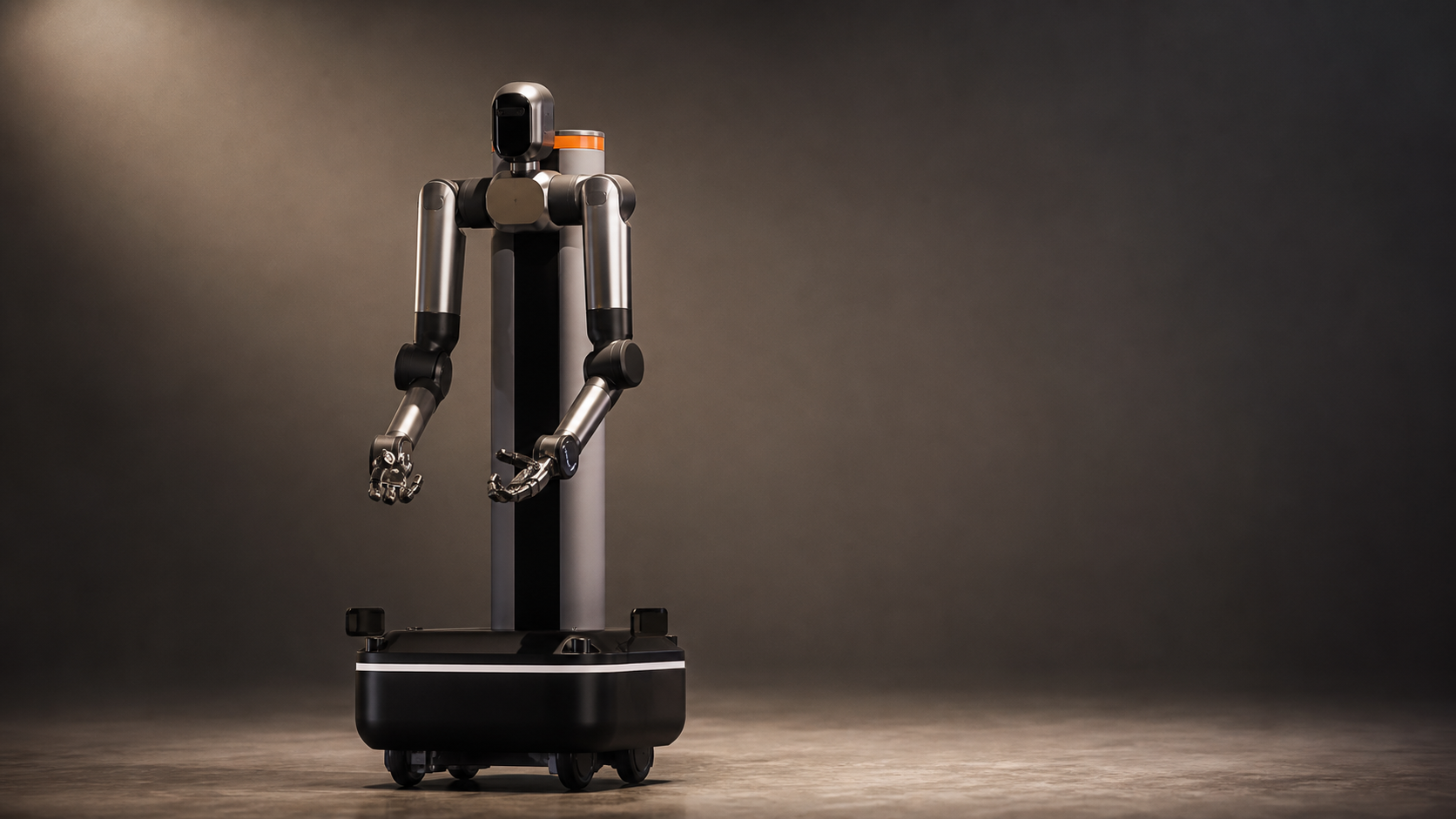
Perceptyne raised $3 million in seed funding on October 14, 2024, with Endiya Partners and Yali Capital co-leading the round and Whiteboard Capital and angel investors participating. The Hyderabad company is building AI-driven semi-humanoid factory robots for automotive and electronics manufacturing, a market where brownfield workcells still depend heavily on custom fixtures, manual handling, and long integration cycles.
Perceptyne was founded in 2021 by Raviteja Chivukula, Jagga Raju Nadimpalli, and Mrutyunjaya Nadiminti, with the founding team identified as IIT Madras and BITS alumni. The company is selling a hardware-heavy manufacturing system, so the team has to mature mechanical design, actuation, sensing, vision, controls, simulation, and customer integration together rather than shipping software into an existing robot fleet.
The current product line points toward brownfield factory automation. PR-OMNI uses dual seven-degree-of-freedom arms, tactile sensing, and a 10-kilogram combined payload for pick, place, bolt, and related workcell tasks. The semi-humanoid format is a practical compromise: two arms and a vertical body let the robot reach fixtures and tools arranged for people, while the mobile base avoids the stability burden of legs.
Perceptyne also presents simulation as part of the sales process, including facility testing through NVIDIA Isaac. That is relevant because the integration promise is aggressive. The company says it can reduce deployment timelines from months to days and avoid major production downtime. For manufacturers, that claim only becomes valuable if simulation actually lowers commissioning time in live plants, where part variation, bad lighting, fixture wear, and maintenance handoffs expose weak systems quickly.
The competitive field includes fixed automation integrators, cobot workcells, mobile manipulators, humanoid factory entrants, and Indian industrial automation companies using lower-cost deployment models. Perceptyne's distinction is the semi-humanoid workcell shape: it is trying to automate human-arranged manufacturing tasks without asking customers to rebuild the whole production line around a fixed robot cell.
Public material remains light on named customer deployments, cycle-time results, uptime, rework rates, intervention rates, and task-level economics. The seed round positions Perceptyne around a real factory constraint: manufacturers want flexible automation for high-mix tasks, but integration time can kill the business case. If Perceptyne can prove fast deployment on a bounded automotive or electronics workflow, it becomes an Indian factory-robotics company with a practical route into semi-humanoid automation.
Have a robotics update Korthos should review? Send news, deployments, product releases, funding rounds, research, or media to tips@korthos.xyz or reach out on X at @agkorthos.
- PerceptyneCompany
- PR-OMNIProduct
Track the machine economy
Regular Korthos briefings on robotics, drones, physical AI, supply chains, funding, product launches, and the companies shaping the stack.