
Perceptyne uses seed funding to push semi-humanoid automation into factories
The Hyderabad startup is building dual-arm industrial robots for assembly, packaging and other dexterous factory work.
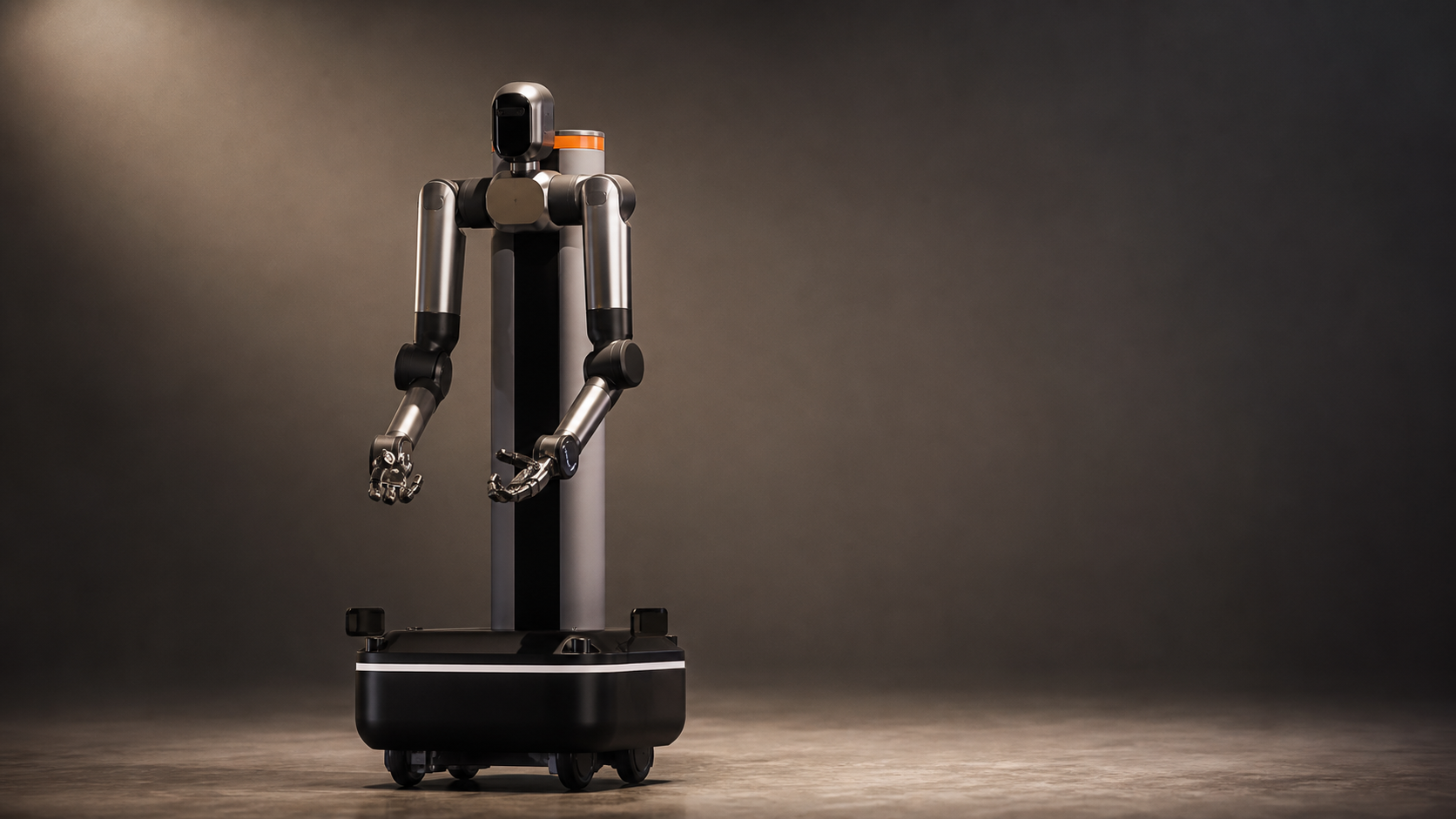
Perceptyne raised $3 million in seed funding on October 14, 2024, with Endiya Partners and Yali Capital co-leading the round and Whiteboard Capital plus angel investors participating. The Hyderabad company said the capital would support product development, customer acquisition and growth while it worked with automotive and electronics manufacturers on AI-driven semi-humanoid robots for industrial automation.
Perceptyne was founded in 2021 by Raviteja Chivukula, Jagga Raju Nadimpalli and Mrutyunjaya Nadiminti, with Business Standard identifying the founding team as IIT Madras and BITS alumni. The company is selling a hardware-heavy manufacturing system that requires mechanical design, actuation, sensing, vision, controls and customer integration to mature together.
Factory work before general humanoids
The current product line points toward brownfield manufacturing. Perceptyne lists PR-OMNI with dual seven-degree-of-freedom arms, vision, force and tactile sensing, a 10 kg combined payload, holonomic mobility and a vertical gantry. The same site places the robot near pick, place, bolt, inspect, test, assemble and insert workflows, all of which are closer to production-cell automation than to open-world service robotics.
The semi-humanoid format is a practical compromise. Two arms and a vertical body let the robot reach fixtures, trays, tools and workpieces arranged for people, while a mobile base avoids the stability burden of legs. Perceptyne can pursue dexterous factory tasks without asking customers to redesign an entire line around a fixed automation cell. The company also presents simulation as part of the sales process, including facility testing through NVIDIA Isaac, which would give customers a way to examine workflow fit before installation.
Funding tied to industrial patience
Seed capital is especially relevant in this category because the hard work arrives after the first impressive demo. A factory robot has to survive part variation, bad lighting, fixture wear, production pressure and maintenance handoffs. Perceptyne also claims it can reduce deployment timelines from months to days and avoid major production downtime, a valuable promise if customer evidence shows integration time falling in real factories.
The strongest public evidence still needs to come from customer runs. Perceptyne has a clear product shape, credible investor backing and an industrial target with real demand, but public material remains light on cycle-time results, named deployments, uptime, rework rates and task-level economics. The next useful disclosure would be a bounded manufacturing workflow with before-and-after operating data, not another general robotics demo.
Have a robotics update Korthos should review? Send news, deployments, product releases, funding rounds, research, or media to tips@korthos.xyz or reach out on X at @agkorthos.
- PerceptyneCompany
- PR-OMNIProduct