
Seasats is turning autonomous surface vessels into a naval data infrastructure layer
A $20 million Series A, a $24 million APFIT award and a $100 million-plus contract base support a distributed hull strategy for persistent ocean scouting.
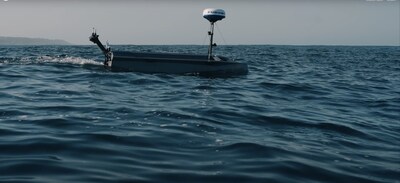
Seasats raised $20 million in Series A funding on February 17, 2026, with Konvoy Ventures leading and Shield Capital, DNS Capital, Techstars, Tanis Venture Management, Crumpton Ventures and Dorado Group participating. The capital expansion brought total backing past $40 million and arrived after a dense military procurement stack was already visible.
The Defense Procurement Pipeline
The $24 million APFIT award recommended by the U.S. Navy and U.S. Marine Corps in January sits at the center of Seasats' defense procurement path. The award supports rapid fielding for autonomous surface vessels that have completed development and are ready for operational use.
Seasats disclosed U.S. government contracts exceeding $100 million, including an $89 million SBIR Phase III contract, rapid prototyping work, and operational demonstrations in U.S. and allied waters. The Series A arrived after that procurement stack was already visible.
Company Origin
Seasats established its ocean autonomy baseline during the SCOUT Transatlantic project in Tiverton, Rhode Island, where members of the founding engineering cohort constructed an uncrewed surface vessel for autonomous ocean transit. SeaSatellites, Inc. was founded in San Diego in 2020 by team members working across ocean autonomy, naval architecture, software and electronics before building the X3 first-generation autonomous surface vessel.
Mike Flanigan is CEO, Dylan Rodriguez is CTO, Max Kramers is Head of Vehicle Design and Dan Flanigan is founder emeritus. Seasats moved into a new manufacturing facility in 2022, joined Trident Spectre, initiated operations with U.S. Navy Task Force 59 and closed an L3Harris-led seed round that same year.
The Distributed Hull Staircase
Lightfish is the portable persistence layer in the Seasats vessel family: 305 lb weight, 5 kt top speed, endurance up to six months, 66 lb payload capacity and one-to-two-person manual deployment. The vessel uses solar-electric power with hybrid reserve, five HD cameras, Iridium and Starlink communications, onboard AI for edge processing and target classification, and max range above 575 nautical miles without solar.
A Navy-led transatlantic crossing used a single Lightfish vessel. Seasats has disclosed public operations with Task Force 59 in the Middle East, Task Force 66 in Europe, scientific research missions off Australia and maritime security patrols in Argentina.
Quickfish adds the high-speed interceptor layer above Lightfish, with an eight-day continuous sea trial announced on March 17, 2026. The vessel weighs 1,450-1,900 lb, carries a 450 lb payload, reaches 35+ kt and 400+ nautical miles, supports trailer or crane-assisted deployment, uses an aluminum hull and includes an integrated UAV payload bay.
Heavyfish is the largest planned hull in the same staircase, with a 2026 splash date, 9,000 lb weight, 12 kt top speed, endurance up to six months, 1,000 lb payload capacity and vehicle or crane-assisted launch.
Maturity
Public deployment registries and Department of Defense transaction records do not disclose delivered units.
Have a robotics update Korthos should review? Send news, deployments, product releases, funding rounds, research, or media to tips@korthos.xyz or reach out on X at @agkorthos.
- SeasatsCompany