Teradyne Robotics is building AI Accelerator into collaborative robot deployment
A March 18, 2025 NVIDIA GTC launch places Teradyne Robotics around AI Accelerator applications for Universal Robots and MiR systems.
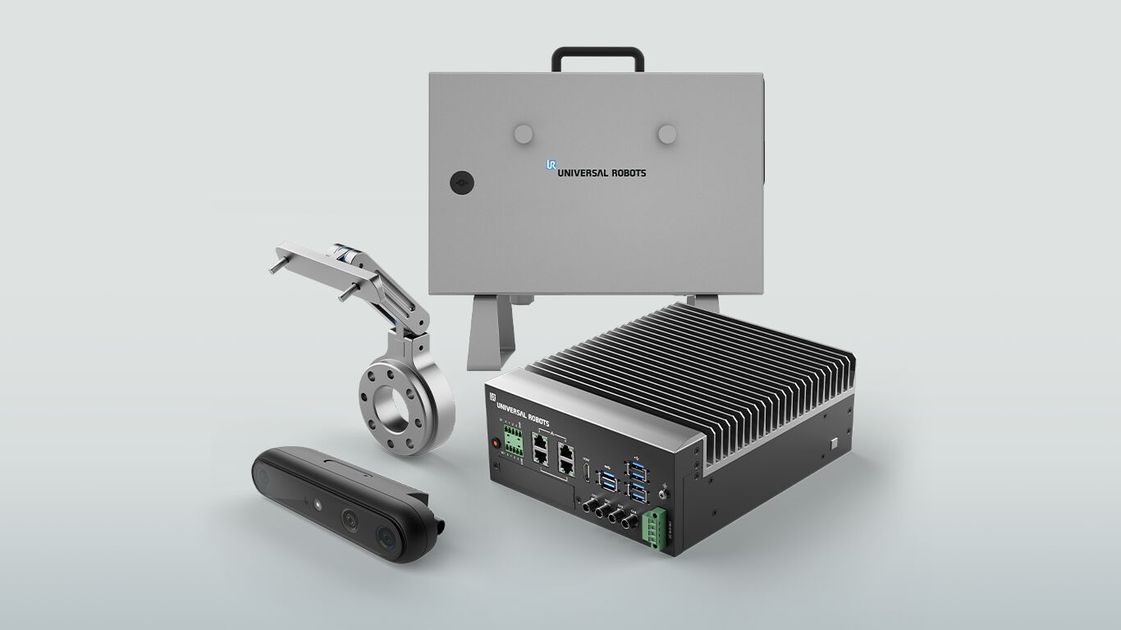
Teradyne Robotics said on March 18, 2025 that it would show AI Accelerator applications at NVIDIA GTC 2025 across Universal Robots cobots and Mobile Industrial Robots AMRs. The announcement placed the work inside two practical automation surfaces: logistics workflows that need mobile manipulation and construction-adjacent tasks where robots need to interpret changing work areas before moving.
AI Accelerator is Teradyne Robotics' attempt to package machine-learning capability around its existing robot lines rather than launch a separate robot body. Universal Robots brings collaborative arms used in machine tending, assembly, packaging, and inspection. MiR brings autonomous mobile robots used for internal logistics. The useful question is whether perception, planning, and application logic can become more reusable across those systems instead of being rebuilt by integrators at each site.
The installed-base context gives the GTC demo more weight than a one-off research clip. Teradyne Robotics owns two mature robot ecosystems with distributor channels, integrator relationships, and existing factory customers. A software layer that reduces setup complexity can move through that installed base faster than a new hardware platform would.
The competitive field includes NVIDIA Isaac-based developer stacks, Intrinsic Flowstate, Wandelbots, Jacobi Robotics, Siemens and Rockwell automation ecosystems, OEM robot-programming tools, and custom AI applications built by systems integrators. Teradyne Robotics' distinction is the ability to tie AI tooling directly to UR cobots and MiR AMRs that already sit inside industrial buying channels.
The proof boundary is still demonstration-level. Public material does not disclose cycle-time reduction, setup-time savings, repeat deployments, error rates, or customer-side economics from AI Accelerator applications. It also does not show whether the same software layer can handle materially different workflows without heavy integration work.
If Teradyne Robotics can make AI Accelerator reduce application effort across arms and mobile robots, the company can turn its robot portfolio into a deployment platform rather than a set of separate machines. The strategic value sits in making AI-assisted automation easier to configure for factories and warehouses that already trust UR and MiR hardware.
Have a robotics update Korthos should review? Send news, deployments, product releases, funding rounds, research, or media to tips@korthos.xyz or reach out on X at @agkorthos.
- TeradyneCompany
Track the machine economy
Regular Korthos briefings on robotics, drones, physical AI, supply chains, funding, product launches, and the companies shaping the stack.